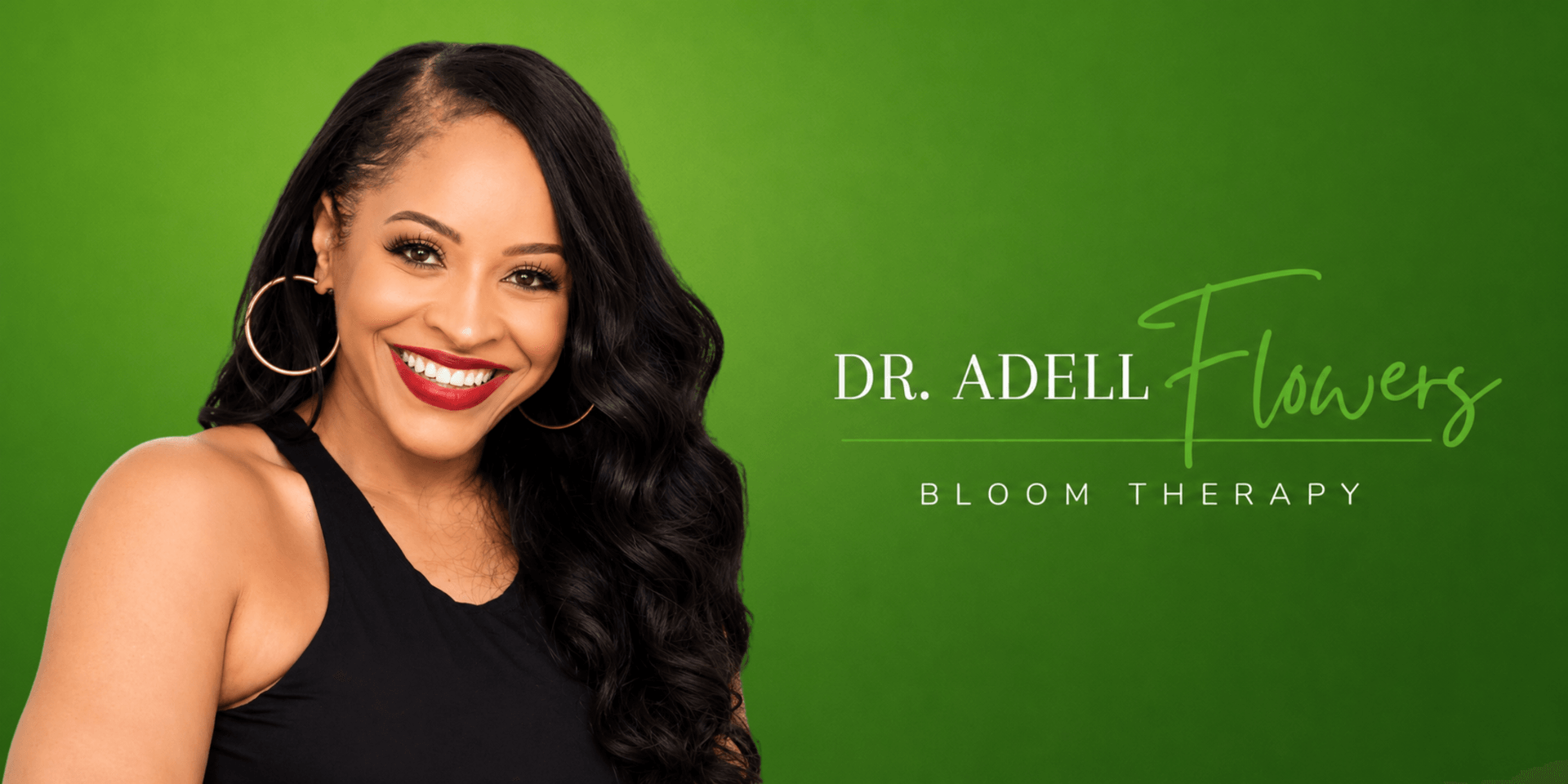
Dr. Adell Flowers helps accomplished women recognize unhealthy patterns, rebuild self-trust, and choose emotional safety.
The moment often arrives quietly. A woman who leads meetings, manages crises, raises families, earns degrees, and makes hard decisions suddenly realizes she has been rehearsing a text message for an hour, trying to avoid another emotional landslide. That gap between outer competence and inner confusion is where Dr. Adell Flowers has built her work. Through Bloom Therapy with Dr. Flowers, she brings relationship discernment into sharper focus for women who are tired of blaming themselves for dynamics they were never taught to name.
The Myth of the Missed Red Flag
Dr. Flowers, founder of Bloom Therapy with Dr. Flowers, is a psychologist, Licensed Professional Counselor, Certified Narcissistic Abuse Treatment Clinician, and mental health educator. Her work centers on a truth many women recognize before they can explain it: unhealthy relationship patterns do not always announce themselves with obvious cruelty. Often, they unfold through inconsistency, fast intimacy, boundary testing, intermittent warmth, selective accountability, and small moments of self-doubt that become easier to excuse than confront.
Her focus on relationship discernment challenges the idea that toxic or emotionally manipulative relationships are simply the result of “missing the red flags.” For high-achieving women in particular, that explanation can feel both insulting and inaccurate. “Being accomplished does not make someone immune to unhealthy relationship dynamics,” Dr. Flowers says. “You can trust yourself in the boardroom and still find yourself questioning everything you know inside a relationship.” Her point is not that intelligence fails in emotionally significant relationships. Emotional manipulation can instead take hold through attachment, empathy, hope, and a person’s desire to repair the relationship.
A Multidisciplinary Lens on Human Behavior
Dr. Flowers brings an uncommon combination of credentials to this work. Alongside her clinical training as a licensed therapist, she holds a PhD in Industrial-Organizational Psychology. That multidisciplinary background gives her a rare view of how power, communication, and interpersonal dynamics operate across both personal and professional environments. With more than a decade of experience in behavioral health and psychology, she has watched the same patterns surface in living rooms and conference rooms alike.
That distinction is central to her work. “When I talk about toxic relationships, I am not just talking about romantic relationships,” she says. “Sometimes the person manipulating you is a partner, but sometimes it is a parent, a sibling, a friend, a coworker, or a co-parent.” Through that broader framing, Dr. Flowers helps women see that emotional safety is not reserved for dating. It belongs in every relationship where trust, respect, accountability, and boundaries are expected.
Making Psychology Feel Human
What has made Dr. Flowers a distinctive voice is not only what she teaches, but how she teaches it. Rather than keeping psychological concepts behind clinical language, she translates them through storytelling, humor, role-play, direct education, and edutainment.
In less than a year, Dr. Flowers has grown her digital community to nearly 20,000 followers, largely women in the U.S. ages 35 to 54. The growth reflects an appetite for mental health education that is clinically grounded without feeling clinical, and serious without losing humor, humanity, or cultural relevance.
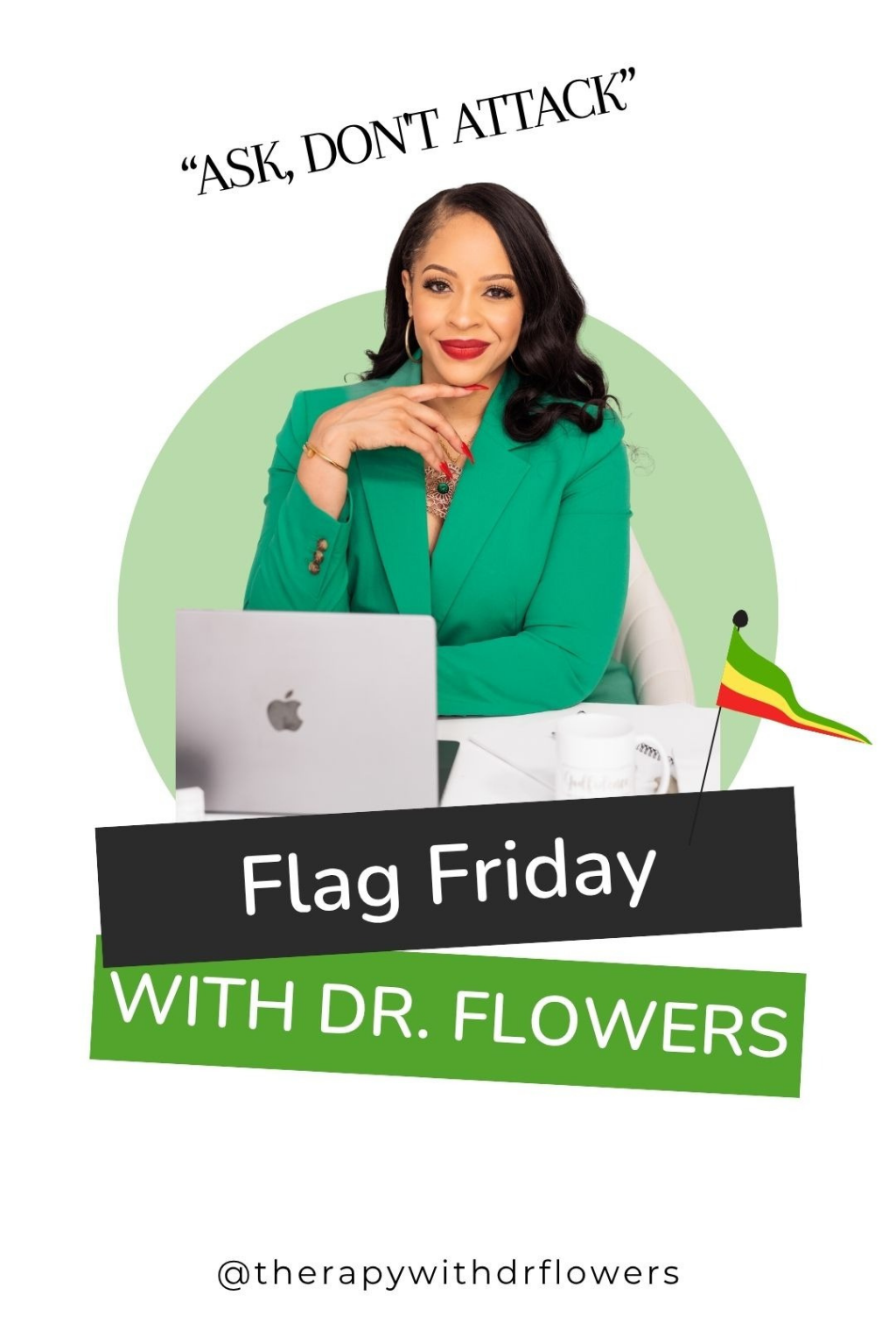
Her signature series put that philosophy into practice. Narc Notes breaks down narcissistic abuse tactics, terminology, and behavioral patterns without turning every difficult behavior into a diagnosis . Flag Fridays explores red, yellow, and green flags across romantic, familial, professional, friendship, and co-parenting relationships. The goal is not to hand people another checklist. It is to teach them how to recognize patterns. Dr. Flowers encourages audiences to pay attention to consistency, accountability, impact, repair, and what happens to their own self-trust over time.
This matters because many people learn relationship advice as a checklist. Leave if someone does this. Stay if someone does that. Dr. Flowers offers something more nuanced. “A red flag is information, not always an immediate diagnosis or a command to run,” she says. “What matters is the pattern, how the person responds to accountability, and what consistently happens to your sense of safety and self-trust in the relationship.” That framing is especially useful for women navigating relationships they cannot simply exit overnight, including family systems, workplaces, and co-parenting arrangements.
Her work also resists the cultural trend of turning serious psychological language into shorthand for every difficult interaction. Narcissistic traits, unhealthy behaviors, manipulative patterns, and Narcissistic Personality Disorder are not interchangeable. Dr. Flowers’s approach distinguishes education from diagnosis, and discernment from fear. It gives women language for what they are experiencing without encouraging them to see danger everywhere. This is part of what makes Bloom Therapy with Dr. Flowers feel both clinically grounded and emotionally responsible.
The Goal Is Not to Make You Suspicious of Everyone
At the center of Dr. Flowers’ work is a distinction that can get lost in online relationship conversations: awareness should not become hypervigilance. Toxic dynamics can gradually distort a person’s self-trust. Someone may begin explaining away behavior, shrinking their needs, over-functioning, or accepting confusion as the cost of closeness. Over time, those patterns can leave a person feeling increasingly disconnected from herself.
Dr. Flowers’ work helps women ask better questions: Does this relationship support emotional safety? Are my boundaries respected? Is accountability followed by meaningful change? Do I feel more grounded in this relationship, or more disconnected from myself?
“The goal is not to teach women to be afraid of relationships,” Dr. Flowers says. “The goal is to help them become discerning enough to recognize the difference between chemistry, familiarity, and emotional safety.”
That distinction can change how a woman dates, navigates family, chooses friendships, collaborates professionally, co-parents, and decides who gets access to her time, energy, and emotional life.
Her message also offers relief from shame. Many women who leave unhealthy relationships wonder why they stayed, why they explained so much away, or why they did not recognize the pattern sooner. Dr. Flowers reframes recovery as a process of learning rather than self-punishment.
“One of the most important parts of recovery is learning to trust yourself again,” she says. “Not because you will never misjudge another person, but because you know you can recognize what is happening, respond to it, and choose yourself when necessary.”
That is the deeper value of relationship discernment. It does not harden women. It steadies them. It helps them hold compassion and clarity at the same time. It allows them to recognize unhealthy patterns without losing hope for healthy ones.
For women ready to better understand their relational patterns, strengthen boundaries, and pursue connection without self-abandonment, Bloom Therapy with Dr. Flowers offers therapy and resources for clients in Georgia, New Jersey, and Washington, including toxic relationship therapy, breakup recovery support, narcissistic abuse recovery, and group therapy through The Flag Society. Beyond individual therapy, Dr. Flowers is expanding her work through digital education, media commentary, speaking, workshops, partnerships, and psychologically informed resources designed to make conversations about emotional wellness, boundaries, and relational health more accessible without diluting their seriousness.
Explore More About Bloom Therapy with Dr. Flowers
Connect with Bloom Therapy with Dr. Flowers, Instagram, and Psychology Today.
Women’s Insider Contributor
Smith John
This article features partner, contributor, or branded content from a third party. Members of the Women’s Insider editorial staff were not involved in the creation of this content. All views and opinions are those of the contributor alone.
Related Posts
Why Luna Skincare Is Bringing Ingredient-Focused Simplicity Back to Skincare
Margarita Monet: Never Surrender Your Mind

Desert Roots Wellness Offers Practical Blueprints for High Achieving Women
The Ivory Bloom Bar Elevates Raleigh Events With a Creative Mobile Floral Experience

She Couldn’t Find the Prenatal Massage She Needed in Dubai, So She Built It