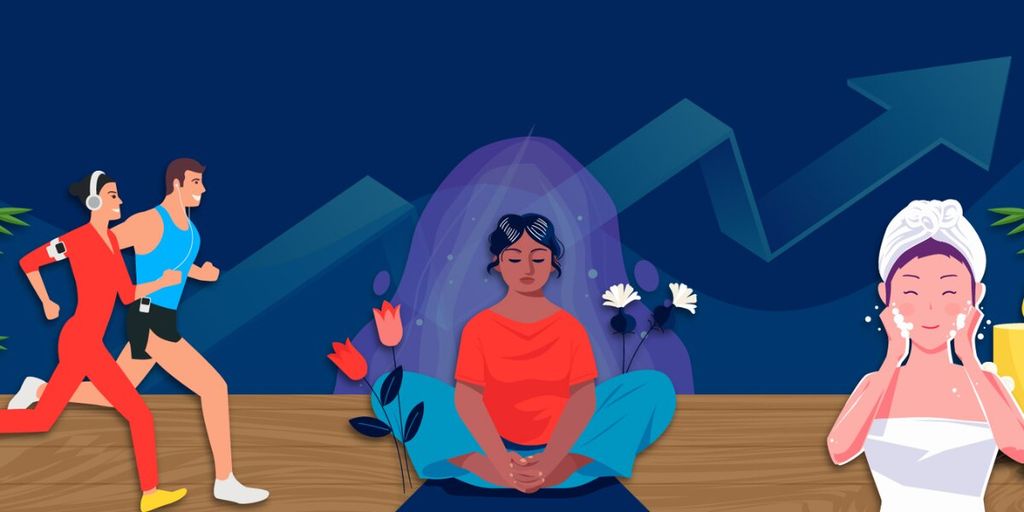
Professionals are adopting simple routines that connect beauty, wellness, nutrition, rest, and stress management for sustainable daily self-care.
For many professionals, self-care no longer means choosing between a skincare product, a gym session, or a quick attempt to get more sleep. It has become a more connected daily practice, shaped by the understanding that energy, stress, nutrition, movement, rest, and appearance often influence one another.
That shift is changing the way people approach their routines. Instead of relying on scattered habits or chasing one result at a time, more professionals are building simple systems that support how they feel, function, and present themselves. The goal is not perfection. It is consistent.
- People Are Looking for Whole-Body Support
Beauty, health, and wellness were once treated as separate parts of life. Skincare was for appearance, exercise was for fitness, and nutrition was often addressed only when energy dropped. Today, many professionals are taking a broader view.
Nutrition often sits at the center of that approach. “Most people underestimate how much their nutrition sits underneath everything else,” says Kallum Mitterer, CEO of True North Protein. “You can have the best skincare and the best sleep routine, but if your body isn’t getting enough protein and real nutrients, it’s working with a weak foundation. The customers who feel the biggest difference aren’t chasing a single supplement. They’ve just made steady, adequate protein a non-negotiable part of how they eat every day.”
This whole-body approach appeals to busy professionals because it feels practical. A balanced meal, a short walk, a consistent bedtime, and a basic skincare routine may seem simple, but together they can create a stronger foundation for daily life.
- Simple Routines Are Easier to Maintain
Long workdays leave little room for complicated plans. Between meetings, deadlines, commuting, and personal responsibilities, routines that require too much time are often the first to disappear.

“The clients who see the best results with their skin aren’t the ones with the longest routines. They’re the ones who actually stick to a short one,” says Jane Pang, Founder and CEO of Getmorebeauty. “A three-step routine you do every morning will always outperform a ten-step routine you abandon after a week. We tell people to build something so simple it feels almost too easy, because that’s the version they’ll still be doing a year from now.”
The appeal is not only convenience. Simple routines also reduce the pressure to be perfect. Missing one workout or one evening step does not mean the system has failed. It simply means starting again the next day.
- Feeling Better Can Support Confidence
Confidence is often linked to appearance, but many professionals find that it begins with how they feel. When someone is rested, nourished, and physically comfortable, it can become easier to stay focused, communicate clearly, and move through the day with more ease.
“Confidence tends to be a byproduct, not a goal,” says Seph Fontane Pennock, Founder of Regenerated. “When people give their body and mind genuine room to recover, real sleep, real downtime, real movement, they start feeling capable again, and that shows up in how they carry themselves. We see people trying to think their way into confidence, when the more reliable route is to let themselves regenerate first.”
The results are often subtle, but meaningful. A person who feels steadier and more prepared may naturally appear more composed in professional and social settings.
- Mental and Physical Well-Being Are Closely Connected
Many professionals have become more aware of how stress can affect the rest of their routine. A demanding week may make it harder to sleep, eat balanced meals, stay active, or keep up with personal care. Because of that, mental reset habits are becoming a regular part of wellness routines.

“The mind and body aren’t running on separate tracks. Stress in one always shows up in the other,” says Marleyna Ritter, LPCC, LCADCA at Bluegrass Recovery Center. “We see how quickly unmanaged stress can unravel someone’s sleep, eating, and motivation, which is why we treat stress management as a core health habit, not a luxury. Even small, consistent practices, a daily walk, a few minutes of quiet, actually taking breaks, build resilience that protects everything else.”
When stress is managed more consistently, other habits often become easier to maintain. Rest improves, food choices become more intentional, and movement feels less like another obligation.
- Natural and Botanical Wellness Is Growing
Alongside the move toward integrated routines, there’s been a surge of interest in where wellness ingredients actually come from. A decade ago, that curiosity centered on herbs, adaptogens, and botanicals; today it increasingly extends to fungi, fermentation, and other corners of the natural world that were once niche.
Companies working in these spaces say the shift is driven as much by curiosity and education as by consumption. “There’s a real wave of interest in fungi right now — people want to understand mushrooms the way they came to understand herbs and botanicals a decade ago,” says Russ Williams, Company Representative at Spore Genetics.
A lot of what we see is educational: hobbyists and researchers studying spores under the microscope, learning about different strains, treating mycology as a serious interest. It reflects a broader shift toward people wanting to know where natural things come from rather than just buying a finished product off a shelf.
- Brands Are Responding to Real Daily Life
Beauty and wellness brands are also adapting to this shift. Many consumers no longer want products that complicate their day. They want routines that feel useful, clear, and easy to repeat, says Steven Gregoire, Owner of Quiet Monk.
This has encouraged brands to focus on practical products and education instead of overwhelming customers with too many steps. A cleanser, moisturizer, sunscreen, protein-rich breakfast, evening stretch, and earlier bedtime may not sound dramatic, but this kind of structure is exactly what many professionals can maintain.
The larger trend is about alignment. People want their routines to match the demands of their lives, not compete with them. The best routines are not built around doing everything at once. They are built around small choices that can be repeated. Over time, those choices help professionals care for their appearance, support their well-being, and feel more prepared for the lives they are working hard to build.
Women’s Insider Contributor
Emily R. Parker
Emily R. Parker is a lifestyle and business writer with a focus on wellness, career development, and modern leadership. Her articles highlight real-world strategies for women balancing ambition and well-being.
This article features partner, contributor, or branded content from a third party. Members of the Women’s Insider editorial staff were not involved in the creation of this content. All views and opinions are those of the contributor alone.
Related Posts
ATETE Cycle-Synced Coffee Reimagines Ritual
Anatomy, Artistry, and Individuality: Inside LA MÔEM Plastic Surgery

How Taiyo Munch Makes Snacking Safer To Share

Who Holds the Woman Who Holds Everyone Else?
Beyond "Just PMS": Carola Le-Wriedt on the Story Behind Wellhistic's Bestselling Formula