
Tiffini Johnson’s forthcoming novel turns rhythm, memory, and survival into a story about truth and courage.
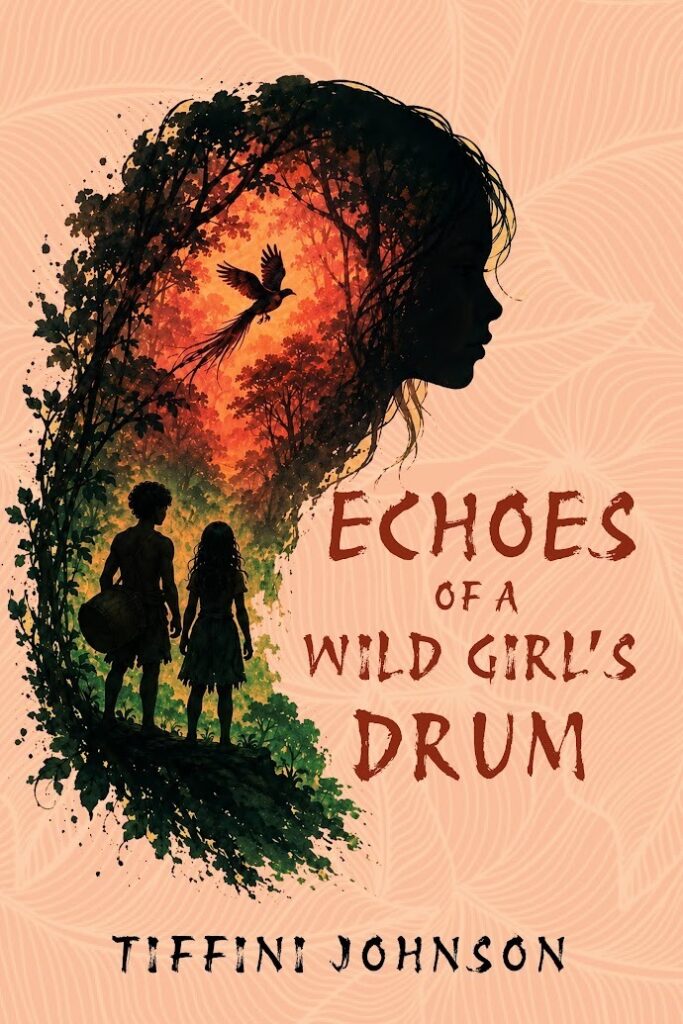
There is a sound before the truth arrives in Echoes Of A Wild Girl’s Drum. It is not only music. It is warning, memory, power, and love. In Tiffini Johnson’s forthcoming novel, the drum becomes the language of a village that would rather preserve comfort than confront what it has allowed. At the center of that sound is Soryelle, a girl whose pain was buried by others, and Maikel, the boy whose rhythm once broke for her.
Echoes Of A Wild Girl’s Drum And The Cost Of Silence
Set for release in July 2026, Echoes Of A Wild Girl’s Drum is now available for pre-order through tiffinijohnson.com. The novel follows Soryelle, a child once marked by fear and rumor, and Maikel, the village drummer whose bond with her becomes both rebellion and remembrance. Johnson’s official book page describes a remote Highland village where rumor can turn deadly, where women are blamed for suffering, and where a girl believed to be gone returns with a story the village can no longer silence.
The book’s emotional force comes from a question that feels ancient and painfully current: what happens when a whole village chooses comfort over truth? Soryelle may be fictional, but her story carries the weight of every child whose pain was dismissed, hidden, or explained away. Through her, Johnson explores how silence can become a system, and how one remembered beat can become a way back to voice.
A Story Built From Rhythm, Memory, And Love
The drum is the novel’s central motif, but it is never just an instrument. In Johnson’s world, it represents authority, danger, tradition, and the pulse of communal judgment. Yet Soryelle and Maikel reshape its meaning. Their private beat becomes a language no one else owns. It is the sound of being seen when no one else is looking, of being remembered when the world insists on forgetting.
That emotional thread is made especially clear in Johnson’s companion excerpt, “The Missing Beat: What I Never Said,” published on July 1, 2026. The excerpt is presented as a letter from Maikel to Soryelle and centers on their intimate, private beat. It gives readers a glimpse into the tenderness, grief, and devotion that define the relationship at the heart of the novel.
For readers, that relationship offers more than romance or longing. It becomes a study of what love can mean in the aftermath of fear. Maikel does not simply remember Soryelle. He carries the spaces she left behind. The novel asks readers to consider how memory shapes survival, how tenderness can resist cruelty, and how love can become a quiet form of defiance.
Tiffini Johnson’s Voice Comes From Lived Witness
Johnson’s path to this story began long before publication. Born in Memphis, Tennessee, she started writing as a child and had created more than one hundred handwritten stories and novels by the time she graduated high school, according to her public author biography. Today, she is known as the author of fifteen published books, many of which deal with abuse, silence, resilience, faith, and survival.
Her work is also shaped by advocacy. Johnson is a certified Guardian ad Litem serving children in dependency care, a certified medical accompaniment person, a volunteer hotline specialist for RAINN, and a member of the RAINN Speaker Bureau, according to her website. Those roles do not turn her fiction into instruction. Instead, they help explain why her stories move with such care around pain. She writes not to shock, but to witness.
What makes Johnson’s storytelling distinct is the bridge between imagination and service. She does not approach trauma as a distant subject. She writes from the lived, complicated place of survival and from years spent beside others carrying hard stories of their own. That background gives Echoes Of A Wild Girl’s Drum its moral gravity. It is not only about what happened to one girl. It is about the danger of looking away.
A Novel For Readers Who Need A Lantern
Johnson’s fiction often speaks to readers who have survived something difficult and still want to believe their story matters. In Echoes Of A Wild Girl’s Drum, that belief becomes narrative momentum. The novel does not promise that survival is simple or neat. Instead, it honors the long, uneven process of being known, of remembering, and of refusing the lies that silence teaches.
That is where the book’s deepest benefit may live. A reader who recognizes herself in Soryelle may find it harder to believe she is alone. A reader who recognizes the village may begin to understand what silence costs. A reader drawn in by the drumbeat may leave with a clearer sense that stories can expose harm without surrendering beauty.
Connect with Tiffini Johnson, Harprints The Bookstore, Facebook, YouTube, and Amazon Reviews.
Women’s Insider Contributor
Rachel M. Collins
Rachel M. Collins specializes in entrepreneurship, media, and contemporary culture. She writes with a reader-first approach, blending clarity with thoughtful storytelling.
This article features partner, contributor, or branded content from a third party. Members of the Women’s Insider editorial staff were not involved in the creation of this content. All views and opinions are those of the contributor alone.
Related Posts

ATETE Cycle-Synced Coffee Reimagines Ritual

Anatomy, Artistry, and Individuality: Inside LA MÔEM Plastic Surgery

How Taiyo Munch Makes Snacking Safer To Share

Who Holds the Woman Who Holds Everyone Else?

Beyond "Just PMS": Carola Le-Wriedt on the Story Behind Wellhistic's Bestselling Formula