
Carrie Davidson’s Addicted To Trauma traces her path from nursing to writing, exploring trauma, self-awareness, and generational patterns shaping her life.
Carrie Davidson’s memoir Addicted To Trauma presents a reflective account of her personal and professional journey, shaped by years of work in nursing and later by her transition into writing. The book explores how lived experience, caregiving roles, and long-term exposure to high-pressure environments can influence how individuals interpret their own behavioral patterns over time.
Rather than framing her story around a single turning point, Davidson’s narrative unfolds gradually. It follows a process of observation, reflection, and evolving self-awareness. Through this lens, the memoir examines how people often come to recognize familiar patterns in their lives only after years of repetition and lived experience.
At its core, Addicted To Trauma is structured as a personal reflection on how individuals make sense of their internal and external worlds, particularly when those worlds are shaped by responsibility, caregiving, and emotional endurance.
Nursing Background and Professional Perspective
Carrie Davidson’s professional background as a registered nurse plays a foundational role in how she interprets experience in her memoir. Nursing, particularly in high-intensity environments, often involves close exposure to human vulnerability, crisis situations, and long-term stress responses.
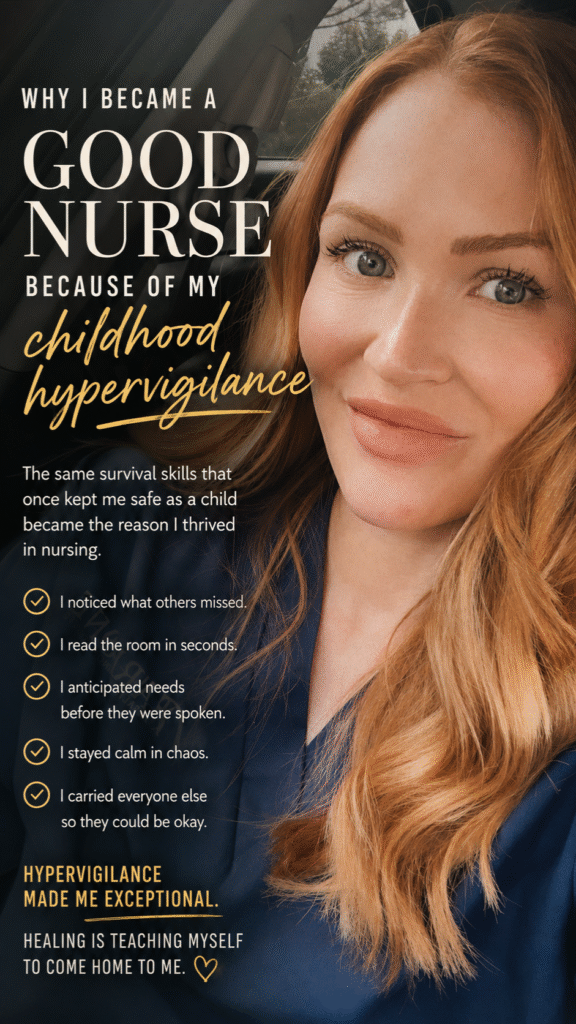
In Addicted To Trauma, Davidson reflects on how this environment influenced her observational awareness of behavior under pressure. The memoir describes how repeated exposure to urgent care settings can lead professionals to develop a heightened sensitivity to patterns of response, both in patients and, eventually, in themselves.
Over time, she began to consider how the same systems of stress response she observed clinically might also appear in everyday life. This shift in perspective becomes part of the memoir’s broader exploration of how professional roles can influence personal insight, particularly when the boundaries between observation and lived experience begin to overlap.
Rather than positioning nursing as a backdrop, the book integrates it as a lens through which broader themes of stress, adaptation, and human behavior are examined.
Transition from Observation to Personal Writing
A key development in Davidson’s journey, as described in the memoir, is the transition from observing others in clinical settings to reflecting more directly on her own internal experiences. This shift is not presented as sudden, but as a gradual recognition shaped by time and reflection.
Addicted To Trauma describes writing as a way of organizing and examining lived experience rather than redefining it. The act of writing becomes a method of tracing patterns, how certain behaviors repeat, how responses form under pressure, and how individuals interpret those responses over time.
The memoir emphasizes that this process is not linear. Instead, it moves between awareness and uncertainty, clarity and contradiction. Davidson’s narrative does not present fixed conclusions, but instead focuses on the evolving nature of understanding.
In this sense, writing functions as both documentation and inquiry, allowing space for questions that do not always resolve neatly.
Behavioral Patterns and Self-Observation
One of the central themes in Addicted To Trauma is the exploration of behavioral patterns and how they develop over time. Davidson reflects on how individuals often normalize certain coping behaviors, especially when those behaviors emerge early in life or in response to long-term stress.
The memoir suggests that these patterns are not always immediately visible to the person experiencing them. Instead, they may become apparent only through repetition or reflection. Davidson’s account focuses on this gradual process of recognition, where familiar responses begin to be seen in a new light.
Importantly, the narrative avoids presenting these patterns in diagnostic or clinical terms. Instead, it frames them as part of a broader human experience of adaptation. The emphasis is on awareness rather than classification, and on understanding rather than evaluation.
Through this lens, the memoir becomes a study of how individuals interpret their own histories and how meaning is constructed over time through reflection.
Generational Influence and Inherited Patterns

Another significant theme in Davidson’s memoir is the influence of generational patterns. Addicted To Trauma considers how behaviors, beliefs, and emotional responses can be shaped by family systems and passed down across generations, often without conscious recognition.
The book reflects on the idea that many of these patterns remain unexamined until an individual begins to question them directly. Davidson’s writing explores how this process of questioning can reshape one’s understanding of personal identity and relational dynamics.
Rather than focusing on blame or resolution, the memoir emphasizes awareness as a form of interruption. It suggests that recognizing inherited patterns is itself a significant step in changing how they are carried forward.
This theme is presented through personal reflection rather than external analysis, keeping the focus on lived experience and interpretation.
Interpreting the Memoir’s Broader Themes
Beyond its personal narrative, Addicted To Trauma engages with broader themes related to identity, resilience, and the interpretation of life experience. The memoir does not position itself as prescriptive or instructional, but as reflective.
It examines how individuals make sense of endurance, particularly when resilience becomes a default mode of functioning. In doing so, it raises questions about how people understand strength, responsibility, and emotional adaptation in the context of long-term stress.
Davidson’s writing also highlights the tension between external perception and internal experience. The memoir reflects on how individuals may appear stable or functional while simultaneously navigating complex internal states that are not immediately visible to others.
Throughout the narrative, there is a consistent emphasis on process over resolution. Understanding is presented as something that develops incrementally rather than arriving all at once.
In doing so, the book situates itself within a broader exploration of how individuals interpret experience, particularly in relation to stress, responsibility, and inherited patterns of behavior. Visit their official website and connect with them on Instagram, Facebook, and TikTok.
Women’s Insider Contributor
Lauren E. Whitman
Lauren E. Whitman covers women in business, lifestyle trends, and personal growth. Her work focuses on practical insights that help readers navigate modern careers and everyday life.
This article features partner, contributor, or branded content from a third party. Members of the Women’s Insider editorial staff were not involved in the creation of this content. All views and opinions are those of the contributor alone.