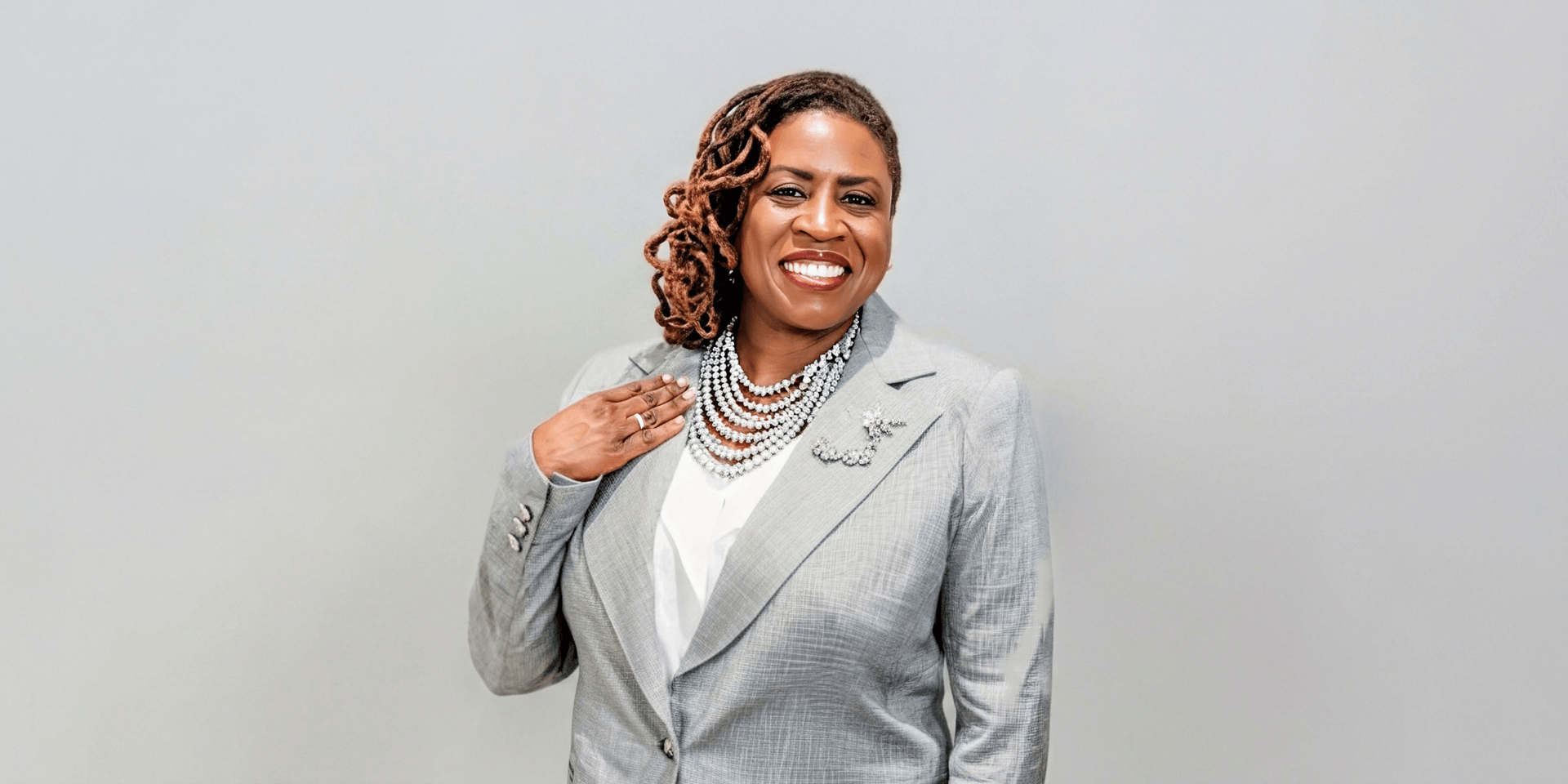
Lejla Becirovic shares hospice insights on love, presence, dignity, and the deeper meaning of life’s final transition and human connection today.
Most people are taught to see death as an ending. Sharp, final, and absolute. A door that closes without return. But Lejla Becirovic, a social work veteran of 21 years has learned something different. For her, death is not a wall. It is a crossing. It is a deeply spiritual experience.
A nationally award-winning hospice social worker, author, artist, and end-of-life care advocate, Becirovic has spent 9 years of her career spent in a hospice setting , sitting beside people in their final hours. In those rooms, where fear softens and time becomes finite, she has witnessed a truth many avoid. Dying is not only medical. It is emotional, relational, and spiritual transformation.
“I don’t think people realize what actually happens when life starts to leave,” she said. “It’s not just the body going through final changes. It’s everything. The emotional world. The spiritual world. The relationships. Everything becomes very honest.”
In hospice, Becirovic sits with people when material world distractions are no longer possible. Titles fade. Pride loosens. Old wounds rise to the surface. People begin to speak not about what they earned or achieved, but about who they loved, who they lost, and who they wished they had held closer.
“It becomes very simple,” she said. “Very human.”
The Sacred Work Of Staying
Hospice care is often understood through the lens of medicine, yet Becirovic’s work reveals what medicine alone cannot measure. Social workers in hospice sit with grief that has no clean shape. They support families searching for the words to say goodbye and witness moments of reconciliation that arrive with fragile urgency.
“We are the ones who sit with patients during final moments, experiencing things that cannot be measured,” she said. “The grief, the silence, the reconciliation, the unfinished love.”
At times, she says, something else is felt in the room. Not always spoken or understood, but deeply present. A stillness. A recognition.
“I’ve had patients who were unresponsive for days suddenly become awake and alert,” she shared. “They look into the room and say things like, ‘My mother is here,’ or ‘They’ve come for me.’ What I notice is not fear. It’s calm.”
Becirovic does not attempt to define these experiences.
“My job is not to explain what they are experiencing,” she said. “My job is to protect the dignity of it.”

Presence At The Threshold
Over time, Becirovic came to understand her role in a way no textbook could teach. She is there to stay while they go.
“To stay with someone who is dying is to step out of the world most people live in—and into a space where time loosens, where words become insufficient, and where presence becomes the only language that still holds meaning.
It is not about fixing anything. There is nothing to fix.
It is about allowing yourself to be still enough to witness a human being as they slowly release everything they have ever known—their roles, their identity, their attachments, their fears… even their breath.
And in that space, something changes in you.
You begin to understand that being with someone is not about what you say. It is about whether you are willing to remain when everything becomes quiet, uncertain, and irreversible.
In those final hours, silence stops being empty. It becomes full.
“Silence holds everything people can no longer say,” she said.
Again and again, she has seen the same truth emerge. In the end, people do not speak about success. They speak about connection and love they experienced.
Like the ferryman in ancient stories who carries souls across the river between worlds, social workers like Lejla Becirovic help guide patients and families through one of life’s most vulnerable transitions. But the “crossing” here is not just about death—it is also about meaning, acceptance, and connection.
They sit with people as fear rises and time feels both precious and limited. They help translate unspoken emotions: regret, love, anger, gratitude, and unfinished stories. Sometimes their work is practical—helping families navigate services, final wishes, or difficult decisions. Other times, it is simply being present when words are no longer needed.
For families, the social worker becomes a steady hand on the shore, helping them understand what is happening while also preparing them for what comes after. For patients, they may be the person who listens without urgency, who can tolerate silence, and who honors dignity when the body is declining but the person remains fully human.
Unlike the mythic ferryman who carries souls alone across the river, the hospice social worker does not carry anyone away. Instead, they accompany people to the edge, making sure no one has to face that threshold in isolation. They help ensure that crossing—whether understood spiritually, emotionally, or practically—is met with compassion rather than fear.
And often, what lingers most is not the moment of death itself, but the way it was held: gently, respectfully, with someone there who was willing to stay through the hardest part.
What The Dying Teach The Living
That understanding does not remain confined to hospice. It follows Becirovic into her own life and relationships.
“I hold only a few people close now,” she said. “I’ve learned to give my full self to those I love, but also to be mindful of who has access to me.”
She describes relationships as spaces that either nourish or drain. The emotional demands of hospice work require her to be intentional about the energy she keeps around her.
“I’ve learned not to stay in connections where people are only partially present,” she said. “The people who matter are the ones who stay when things get heavy. The most valuable thing we have to offer others is our love, in it’s purest form. The most valuable thing we have to offer another human being is not advice, not solutions, not even understanding—it is love in its purest form: raw, unfiltered, and unprotected; the kind of love that does not calculate how much to give, that does not hold parts of itself back out of fear of being unmet, that does not shrink to stay safe, but instead shows up without conditions, stays when things become uncomfortable, and remains present even when there is nothing left to fix.
For Becirovic, real love is not performance or convenience. It is presence.
“Real love shows up fully,” she said. “Even when it’s uncomfortable. Even when it costs something.”
She reflects on that understanding with honesty.
“I give deeply,” she said. “But I’ve learned not everyone can meet you there.”
A Life Shaped By Loss And Clarity
Before working in hospice, Becirovic lived through war in Bosnia. That experience shaped her understanding of loss, time, and human resilience.

“When you’ve seen life break suddenly,” she said, “you stop assuming time belongs to you.”
That perspective allows her to sit with grief without turning away. It informs a trauma-informed and culturally sensitive approach to her work with patients and families.
Yet she does not describe hospice as darkness. She describes it as a return to life, its most honest, most stripped, and most sacred form.
“Hospice is not about dying,” she said. “It’s about life—about seeing it clearly, sometimes for the first time.”
In those final days, everything unnecessary begins to fall away. What remains is not fear, but truth. Not noise, but presence. People begin to see their lives with a clarity that is rarely reached in the rush of living.
“I don’t hold onto things the same way anymore,” she said. “I don’t delay what needs to be said or felt. Because I’ve seen what it looks like when life runs out of time.”
There is sorrow in hospice, yes—but it is not empty. It is filled with meaning. With reconciliation that finds its way through silence. With forgiveness that softens what once felt unmovable. With love that becomes more visible when everything else fades.
And within that space, something spiritual begins to surface—not as a concept, but as an experience.
“There is something that feels bigger than us,” she said. “Some call it God. Some call it spirit. But in those moments… it feels close.”
Close in a way that quiets fear.
Close in a way that softens the unknown.
Close in a way that reminds people they are not leaving life empty-handed—but carried by something beyond it.
In hospice, she says, life does not disappear.
It reveals itself.
Fully. Honestly. Spiritually.
And sometimes, for the first time, people begin to understand what it truly meant.
A Message Of Presence
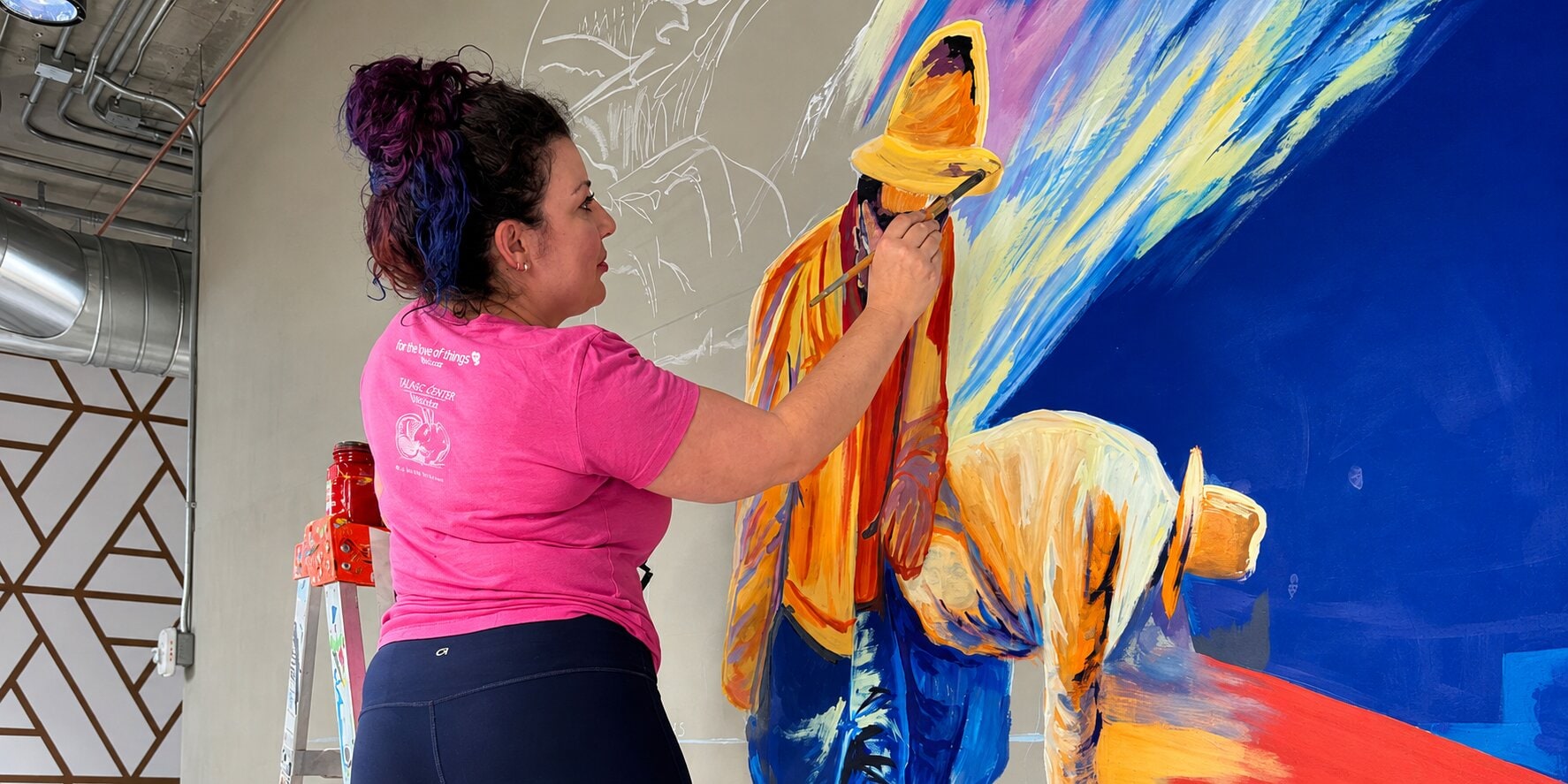
Lejla Becirovic continues to share her perspective through her work as a hospice social worker, artist, and author. Her book, Beyond Borders: Story Of War, Love And Loss, is available here: Amazon
Readers can also explore the book’s updates and community on Facebook:
Beyond Borders Book Official Site | Facebook
Lejla Bećirović | Instagram photos and videos
Her artwork and creative reflections are shared through Artbylejla:
Art by Lejla | Facebook
Lejla Bećirović | Instagram photos and videos
“It is a crossing,” she said. “And I am simply the presence that says: you are not alone as you go.”
Her work is not only about death. It is about what remains when everything else fades. About staying, witnessing, and honoring the final moments of honesty that define a life.