



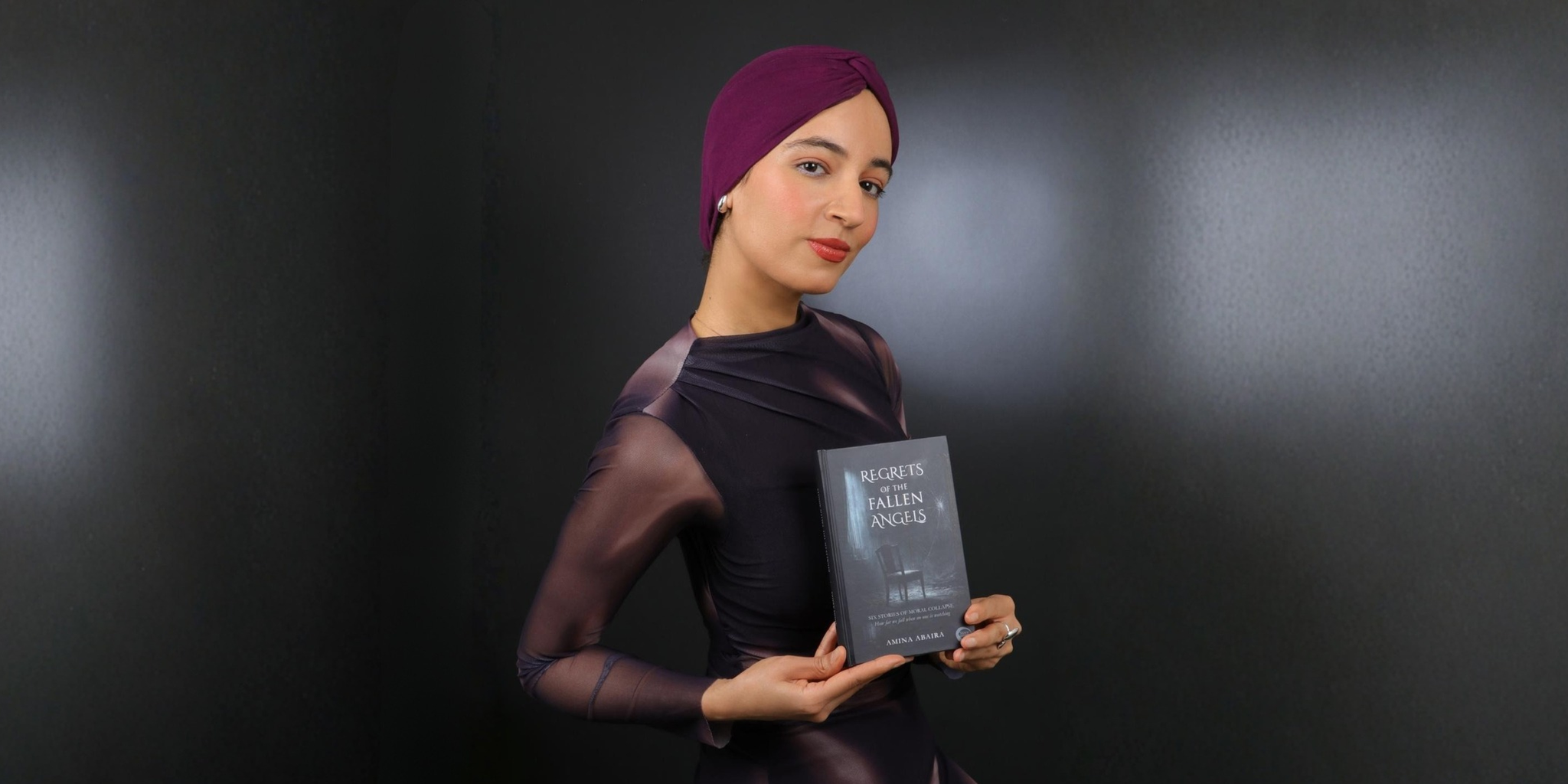
Amina Abaira’s Regrets of the Fallen Angels explores moral struggle and regret through six powerful stories about human choice and consequence.
There are moments when a person makes a decision they believe they understand, only to realize later that the consequences were far deeper than expected. A conversation that could have gone differently. A silence that should not have lasted. A choice made under pressure that never fully leaves the mind.
This is the emotional space where Regrets of the Fallen Angels begins. Amina Abaira builds a world where human beings are not defined by perfection but by the weight of their decisions. Each story captures a turning point where morality becomes uncertain and emotion takes control.
Instead of presenting clear answers, the book invites readers into the quiet tension of human thought. It asks what happens when people live with choices that cannot be undone.
Origin of Regrets of the Fallen Angels
Regrets of the Fallen Angels is a collection of six stories written by Tunisian author Amina Abaira, who is based in Germany. Each story takes place in a different environment with different characters, yet all are connected through one central idea. Regret.
The stories do not rely on shared settings or recurring characters. Instead, they are unified through emotional experience. Each narrative explores how individuals respond to situations where the right path is not clearly defined.
Abaira’s writing focuses on internal reality rather than external events. The emphasis is placed on what characters feel, justify, and question after decisions are made. This gives the collection a reflective tone that encourages readers to think beyond surface level storytelling.
Moral Struggle at the Core
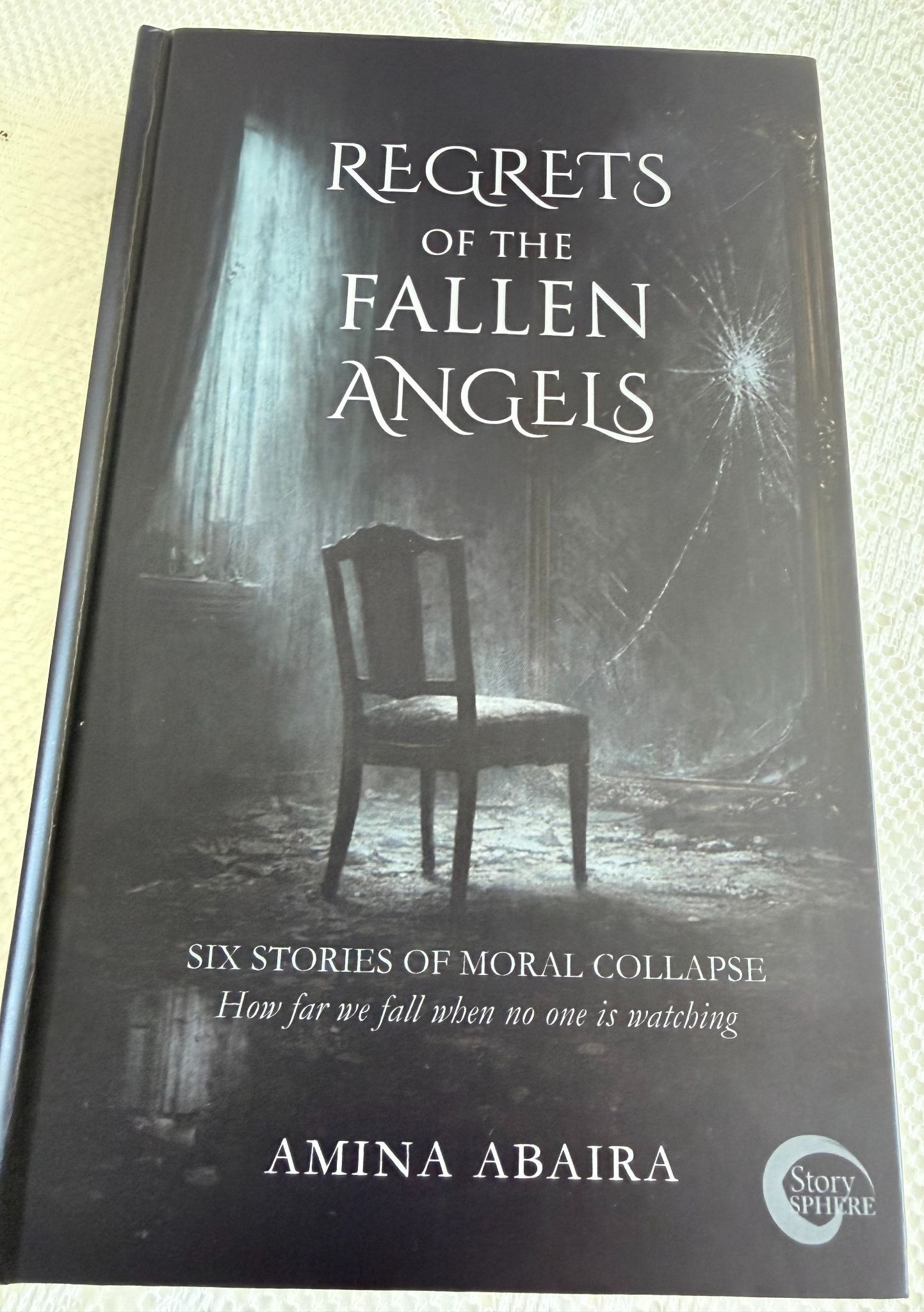
At the heart of Regrets of the Fallen Angels is moral struggle. The characters are placed in situations where every option carries emotional cost. There are no perfect outcomes, only choices that shift the direction of a life.
The stories explore how people justify actions when faced with fear, desire, responsibility, or conflict. Instead of presenting morality as fixed, the book shows it as something shaped by circumstance and emotion.
This approach creates a sense of realism. Readers are not guided toward judgment but toward understanding. The focus remains on why decisions are made and how they continue to echo long after the moment has passed.
A Narrative Without Illusion
Amina Abaira writes her characters without masking their flaws or refining their truths for comfort. They speak and act according to their beliefs in the moment, even when those beliefs lead to regret.
This narrative choice removes the distance between reader and character. Instead of observing idealized versions of human behavior, readers encounter people who are uncertain, conflicted, and emotionally exposed.
The strength of this approach lies in its honesty. It reflects how real individuals often behave when faced with pressure. Not through perfection, but through contradiction and vulnerability.
Cultural Perspective and Human Insight

As a Tunisian writer living in Germany, Amina Abaira brings a layered perspective to her storytelling. While her work is not centered on cultural comparison, her background informs her sensitivity to human behavior across different environments.
This perspective allows her to explore universal emotional experiences without limiting them to one cultural lens. The result is a collection that feels both grounded and widely relatable.
Her stories focus on the internal world of individuals rather than external labels. This helps highlight the shared nature of emotional struggle regardless of setting or background.
The Impact of Regret
Regret in Regrets of the Fallen Angels is not treated as a passing feeling. It becomes something deeper. It shapes memory, identity, and self perception.
Characters do not simply experience regret. They carry it. It influences how they think about their past and how they move through their present. In some cases, it becomes a defining part of who they are.
This emotional weight is what gives the collection its lasting impact. It reflects how certain decisions remain present in the mind long after the moment has ended.
Readers are encouraged to reflect on their own experiences of choice and consequence. The stories create space for personal interpretation rather than fixed meaning.
Regrets of the Fallen Angels offers more than storytelling. It offers reflection on the nature of human decision making and the emotional truths that follow it. For readers seeking fiction that explores moral complexity and psychological depth, Amina Abaira’s work provides a powerful and thought provoking experience.
To learn more about the author and her work, visit her interview and official feature page for additional insight into her creative process and themes.
Explore more here and on Instagram here.
