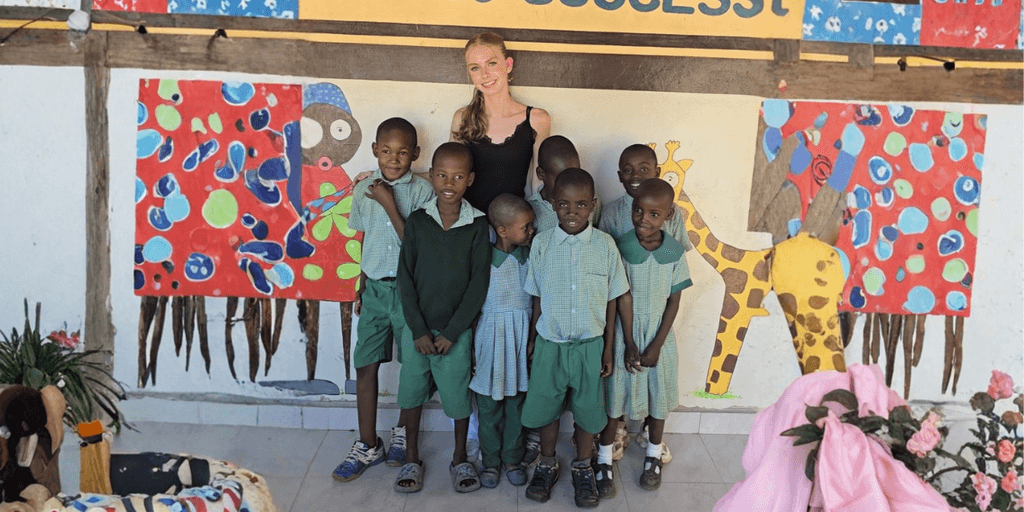
The 15-year-old German model and athlete spent a day with 52 children who live on generosity and resolve and left with questions about what happiness and purpose truly mean.
When Nelly Opitz arrived at the children’s home, the rooms were silent and empty. No beds lined the walls, no belongings scattered across floors, just clean, spare rooms where mattresses are rolled up and stored each day. At this home in Kenya, 52 children keep their personal items in small bags, and every morning their sleeping mats are cleared to make space for the day ahead.
At 15, Nelly Opitz is Germany’s 2025 federal rope-skipping champion (14–15 division), with a personal best of 400 jumps in three minutes and selection to the 2025 Hessen State Squad. Beyond competition, she models, creates bilingual (German/English) content for an Instagram community of more than 118,000 followers, and uses her platform to explore what discipline, creativity, and connection mean beyond sport. This trip to Kenya was part of that exploration.
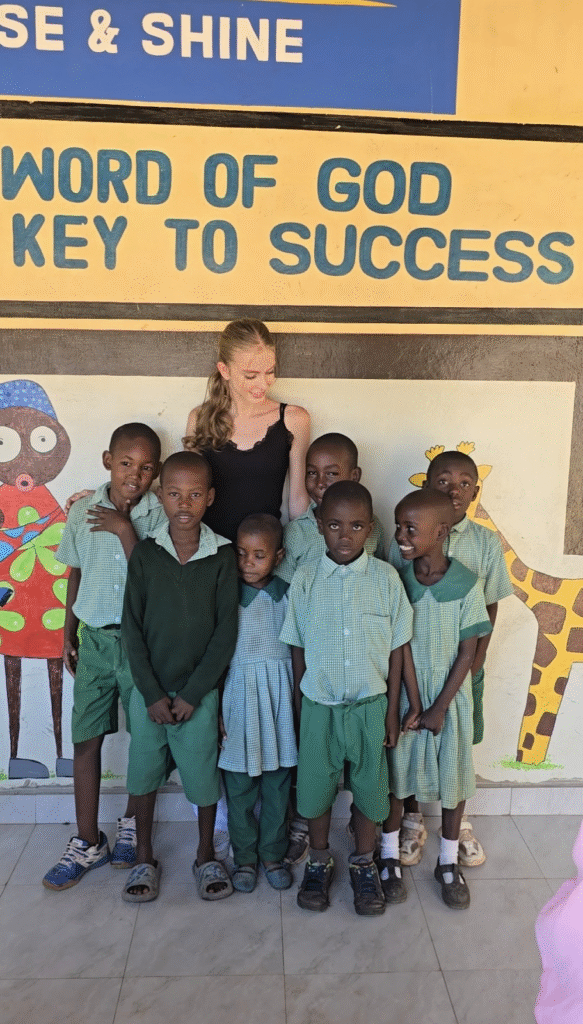
Then the children returned from school. They’d left early that morning and came back around 12:30 p.m. for lunch. School meals were too expensive, so the home provided food instead. There wasn’t much time before they had to return to class at 2 p.m. But each child stopped to shake Nelly’s hand. They took a picture together, their smiles easy and genuine. Then they hurried off to eat.
It was brief but it stayed with her.
Nelly felt two emotions at once: happiness at the warmth the children showed her, and a quiet sadness about the simplicity of their daily reality. Three bedrooms house all 52 residents. Mattresses rest directly on the floor. Personal belongings fit into what a single bag can hold. On the drive back, she found herself thinking about that contrast how little they had materially, and how much grace they offered anyway.
Outside the children’s home, the red earth glowed under a wide sky. Only a few days earlier, Nelly had been exploring Kenya’s coast, beautiful lodges, vibrant markets, endless color. The shift was striking. Both experiences were real; neither was the “truth” of Kenya. But visiting the children’s home made her question which version of travel and of life she wanted to prioritize moving forward. Tourism shows one face of the country; the children’s home reveals another. Together, they formed a picture that was harder to forget: joy existing alongside struggle, clarity beside complexity.
The home was founded in 2004, beginning as a food kitchen before expanding into full residential care for children aged 3 to 25. Six caregivers, teachers, and volunteers manage daily operations. The organization runs entirely on donations; no government or NGO funding currently supports it, though there’s hope that state backing may return after upcoming elections. Each school semester brings financial strain: fees, exam costs, and uniforms add up quickly across 52 students. Healthcare averages about €12 per child each month.
Despite limited resources, the home is making progress. A new roof was recently installed, walls extended to meet it, and new mattresses replaced worn ones. A more efficient kitchen is under construction to replace the open fireplace, reducing energy consumption and costs. A water tower and larger pump are being built to ease the daily burden on the small existing pump and lower electricity bills. Long-term plans include purchasing land where the children can grow food and raise animals; chickens and goats already provide eggs, milk, and meat moving the home toward self-sufficiency.
Life here follows a rhythm. Weekdays mean early mornings, school, lunch at the home, more school, and a return around 5 p.m. Saturdays offer rest: the children sleep until 7 a.m., clean their rooms, eat breakfast, then have the day free. Sundays begin earlier with church, followed by another day off. Between chores, the children play with local kids and help care for the animals.
For Nelly, whose career is building across sport, fashion, and digital storytelling, Kenya clarified something important: success matters most when it creates space to amplify others. She doesn’t have all the answers yet about how to help meaningfully but she knows her growing platform, her voice, and her choices will determine whether that success stays personal or becomes useful.
About the Home
Key Facts
- Founded: 2004; started as a food kitchen, now provides full residential care
- Current residents: 52 children (ages 3–25)
- Staff: 5 caregivers, teachers, and volunteers
- Funding model: Entirely donation-dependent; no government or NGO support currently
- Active projects: Building renovations, new kitchen construction, water tower and pump installation, future land purchase for self-sufficiency
To learn more about the home’s work, visit their Facebook or Instagram pages, where updates and ongoing stories are shared.
You can also follow Nelly Opitz on Instagram and TikTok for reflections and insights from her trip.
Women’s Insider Contributor
Marion Oliver
This article features partner, contributor, or branded content from a third party. Members of the Women’s Insider editorial staff were not involved in the creation of this content. All views and opinions are those of the contributor alone.
Related Posts

The Swiss Colombo Method for Women Over 45

Why Luna Skincare Is Bringing Ingredient-Focused Simplicity Back to Skincare
Margarita Monet: Never Surrender Your Mind

Desert Roots Wellness Offers Practical Blueprints for High Achieving Women
The Ivory Bloom Bar Elevates Raleigh Events With a Creative Mobile Floral Experience