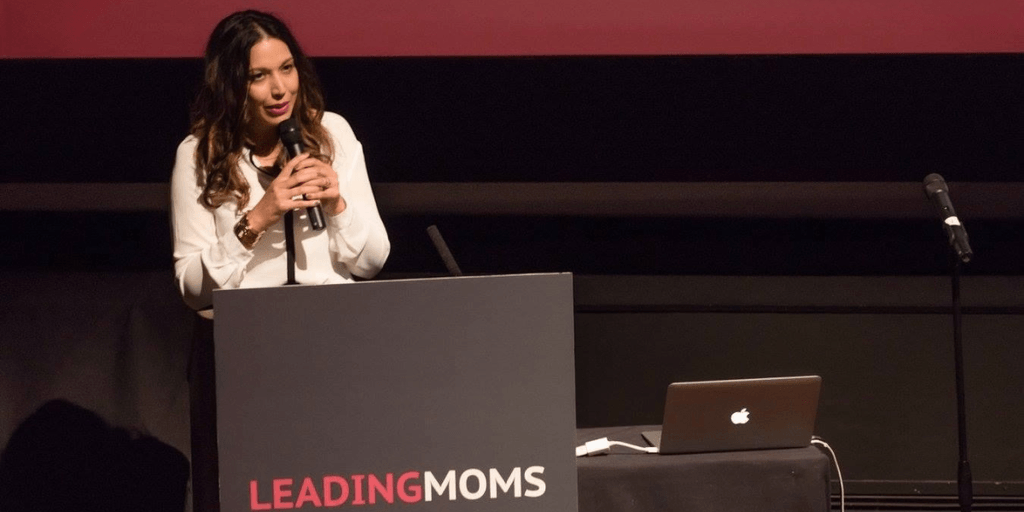
Ranbir Puar on self-trust, why insight doesn’t always create change, and why hearing ourselves matters in the age of AI.
There is a particular kind of frustration that comes from knowing better and still not doing differently. You know the relationship is no longer right, but you stay. You know you need to set a boundary, but when the moment comes you soften it or, maybe worse, say nothing. You know you have outgrown the role, the habit, or the version of yourself you have been living as, yet taking the next step feels disproportionately difficult.
Most frustrating of all, you may already understand why. You have read the books, listened to the podcasts, tried therapy or coaching, journaled, meditated, and learned enough about your own patterns to explain them with remarkable clarity. You are not lacking insight. Insight has simply not translated into change.
That gap is central to the work of Ranbir Puar, Founder of Pure Atma Growth & Development Inc. Since 2009 she has worked with clients using an integrative approach that includes Clinical Hypnotherapy, Nervous System and Somatic work, biofeedback, neurofeedback, and mindset. What she has observed, again and again, is that people can become extraordinarily sophisticated at understanding themselves and still remain caught in patterns they consciously want to leave behind.
The useful question is not always what else they need to know. It is what is making it difficult to live what they already know.
When understanding the pattern is not enough
Much of personal development begins with the conscious mind. We identify beliefs, examine thoughts, reframe experiences, and make deliberate choices about how we want to behave. Those top-down approaches can be valuable, and they remain part of Puar's work. Conscious understanding is not the only process influencing human behaviour.
Her practice therefore moves between levels. Reflection, psychoeducation, and intentional changes in thought sit alongside somatic practices, breath, and regulation. Biofeedback and neurofeedback work with physiological processes. Clinical Hypnotherapy can reach associations, imagery, and learned responses that do not always surface through analysis.
That integration matters when the conscious mind has already done its work and the old response still arrives on time. The person is not missing information. They are meeting a pattern that was learned in the body, in relationship, and in the conditions that first made it useful.
It is easy to call these contradictions self-sabotage. Puar is more interested in what may be happening beneath them. An unwanted behaviour rarely tells us everything about the person living it. Perfectionism, people pleasing, emotional suppression, or chronic self-reliance can have different origins and different functions from one person to another. Recognizing that a pattern is no longer helpful does not make the response disappear.
The aim is not to blame every difficult behaviour on the nervous system. It is to become more curious about the gap between intention and action.
Self-trust is more than trusting your gut
This is where self-trust becomes more complex than popular advice suggests. Trust yourself sounds straightforward until fear feels like intuition, familiarity feels like safety, or saying yes feels easier because a person has spent years avoiding the discomfort of saying no. The thing someone genuinely wants may frighten them. The thing keeping them stuck may feel reassuringly familiar.
Self-trust cannot mean following every thought, feeling, or bodily sensation. It requires discernment. It is the capacity to notice internal signals without automatically obeying, dismissing, or overriding them.
Puar organizes that work around four interconnected pillars.
Self-Image is the internal operating system that influences what we believe we can hold, receive, or become. A person can consciously want a larger life while still carrying a ‘program’ of themselves that makes visibility, success, receiving, or change difficult to sustain.
Self-Trust is the capacity to remain in relationship with what we know, rather than abandoning ourselves the moment someone else disagrees. It does not require certainty, and it does not mean refusing useful advice. It means outside perspectives do not automatically become more authoritative than our own.
Congruence is the distance between private truth and public expression. Knowing that a boundary is needed is insight. Being able to communicate and live that boundary is congruence.
Sovereignty asks a larger question. Who is driving? It is the movement from being a passenger in a life directed by fear, conditioning, expectations, or other people's approval toward becoming an active participant in how that life is lived.
Together, the four pillars explain why accumulating information has limits. A person can know what they want and still struggle to believe they can have it. They can know what feels true and immediately seek permission to trust it. They can privately recognize what needs to change while continuing to live in a way that contradicts that knowing.
The age of infinite advice
Humans have always looked outside themselves for guidance. Family, friends, teachers, therapists, coaches, and experts can see what we cannot from inside our own experience. Expertise and evidence matter. Seeking perspective is not the problem.
What has changed is the volume and speed of input. Someone facing a difficult decision can consult friends, search the internet, watch videos, read opinions, and ask AI to analyze possible outcomes, all before spending ten uninterrupted minutes considering what they actually think and feel.
AI makes this tension especially visible because another answer is available almost instantly. Someone can ask whether to leave a job, end a relationship, pursue an opportunity, or make a significant change and receive thoughtful analysis in seconds. If the answer does not feel right, they can simply ask again.
Technology didn’t create our tendency to seek reassurance; it made reassurance available on demand. Information can broaden perspective and reveal what we have missed. But there comes a point when seeking another opinion stops helping us decide and starts helping us postpone trusting ourselves.
As Puar puts it, “Self-trust is not having all the answers. It is developing the capacity to hear yourself clearly enough to make a decision you can stand behind.”
In an age of infinite advice, that capacity may matter more than ever.
A compass that does not give you the answer
From that philosophy, Puar created the Atma Decision Compass, a framework organized around four points: Awareness, Purpose, Alignment, and Action.
It is not another authority telling someone what to do, nor a test that produces a verdict. Awareness asks what is happening and what assumptions, emotions, pressures, or patterns may be influencing the person. Purpose asks what the decision is meant to serve. Alignment examines whether a possible choice reflects the person’s values. Action identifies what comes next.
Consider a relationship that is no longer right. She already knows. She has known long enough to explain it to a friend, therapist, or search bar. What she has not done is sit with that knowing long enough to hear her inner guidance. Awareness might explore what keeps her staying: fear of being alone, loyalty, hope that the other person will change, or the identity she built around the relationship. Purpose asks what staying or leaving is meant to serve. Alignment considers those options against what she already knows to be true. Action identifies the next honest step, which may be a conversation rather than a conclusion.
Most decision-making tools try to deliver the right answer. The Decision Compass is designed to strengthen the person making the decision. It doesn’t eliminate uncertainty or promise perfect outcomes. Instead, it offers a repeatable way to quiet the noise, examine what is influencing a choice, and move forward with greater awareness.
Readers can explore the framework at https://www.innerchampion.me/compass.
The goal is to return authorship to the person whose life will be shaped by the choice.
The goal is not certainty
Self-trust does not guarantee certainty. Some choices will remain difficult, with risks on every path. Developing self-trust isn’t about eliminating uncertainty, but changing how we meet ourselves within it.
Advice can be valuable, and AI can be remarkably useful. But there is a difference between gathering information that helps us decide and continuing to gather information because we are afraid to choose. Eventually, we must decide what matters, what we are willing to risk, what we will no longer tolerate, and what kind of life we want our choices to create.
As technology becomes increasingly capable of giving us answers, the challenge is not simply accessing better intelligence. It is learning to use that intelligence without surrendering our own capacity for discernment.
In a world increasingly capable of answering us, we cannot afford to lose the ability to hear ourselves.
Continue The Conversation With Ranbir Puar
Connect with Ranbir Puar and explore more of her insights, inspiration, and latest content on TikTok, Pinterest, Instagram, Facebook, LinkedIn, and YouTube.
Women’s Insider Contributor
Emily R. Parker
Emily R. Parker is a lifestyle and business writer with a focus on wellness, career development, and modern leadership. Her articles highlight real-world strategies for women balancing ambition and well-being.
This article features partner, contributor, or branded content from a third party. Members of the Women’s Insider editorial staff were not involved in the creation of this content. All views and opinions are those of the contributor alone.
Related Posts

Why Pet Owners Are Choosing To Honour Their Fur Babies With Diamonds

Jade Christy Is Building Modern Vampire Romantasy Series For Readers Who Love to Binge The Whole Story
Maddox Candles Brings Calm Home

Women Entrepreneurs Gather in Sacramento as Powered by Women LIVE 2026 Concludes
Elegant Bookkeeping Turns Chaos Into Clarity