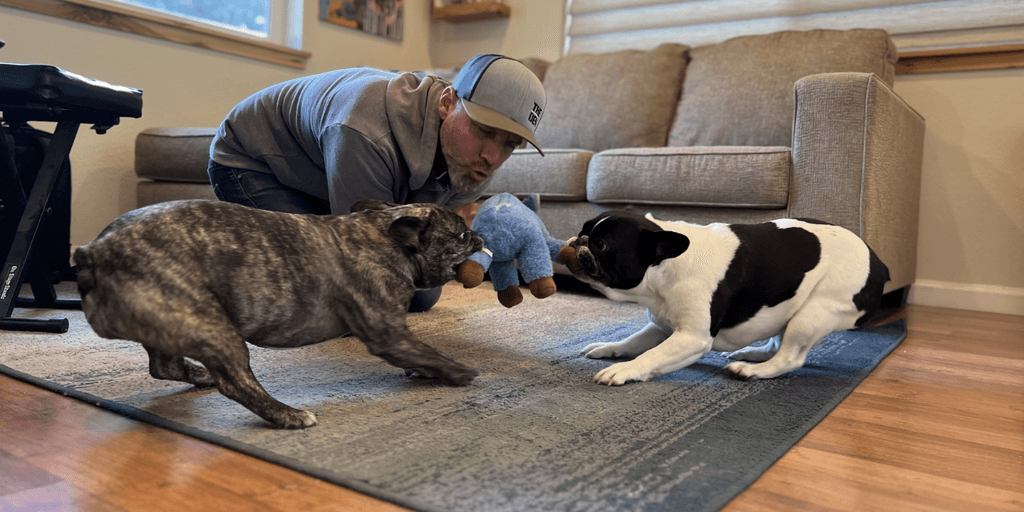
A call for people to respect dogs’ boundaries, read their body language, and let them choose when affection is welcome.
By Blair Diamond, founder of Primal Needs Behavioral Solutions
I have spent more than 27 years working with dogs, and I keep coming back to one thought: dogs need a #MeToo movement.
Let me be clear about what I mean. Tarana Burke founded the “me too.” movement to support survivors of sexual violence. That is a human experience of profound harm, and I am not equating it with an awkward greeting at the dog park. I am borrowing one important question the movement pushed into everyday conversation: Did anyone ask whether that contact was welcome?
Picture me walking up to a woman I have never met, wrapping my arms around her and kissing her face. Maybe I'll show up with flowers and cookies, too. In my head, I am thinking, “Look what a nice guy I am. I’m loving you, so you’re gonna love me.” She would have every right to slap me. That is creepy. The flowers do not make it romantic, and the cookies do not make it less creepy. We do not get to decide that a stranger will welcome our affection just because we want to give it.
Now watch what happens when people meet a dog. Someone says, “Oh, I love dogs!” and walks straight up to a stranger’s dog, leans over them, reaches for their head and puts their face close to theirs. If the dog moves away, the person follows or asks, “What’s wrong with your dog?” Nothing is wrong with the dog. The dog just met you.
Some of us are outgoing. Some of us are introverted. Dogs have different personalities, too. That is part of why we love them. A dog is a unique individual, not just a breed, a weight and an age. And whether someone loves dogs tells me something about that person; it tells me nothing about whether this particular dog wants to be touched by them.
When I meet an unfamiliar dog, I think of meeting someone else’s child. I would not rush up to a child I have never met and start hugging and kissing them. I would speak with the parent, share the space and let the relationship develop. A dog deserves that same pause.
First, ask the person responsible for the dog: “Does your dog like being pet? Do they enjoy meeting new people?” I am asking whether the dog likes it, not whether they will put up with it without getting aggressive. Those are two very different things.
Then give the dog room. Turn a little sideways. Share space without demanding an interaction. Keep your hand relaxed at your side. A lot of dogs will stretch forward to sniff you while keeping the rest of their body back. They are gathering information, not asking for affection. Think of that sniff as an initial conversation, maybe a handshake. A handshake does not mean we are familiar enough to hug goodbye, and a sniff does not mean the dog wants you to pet them.
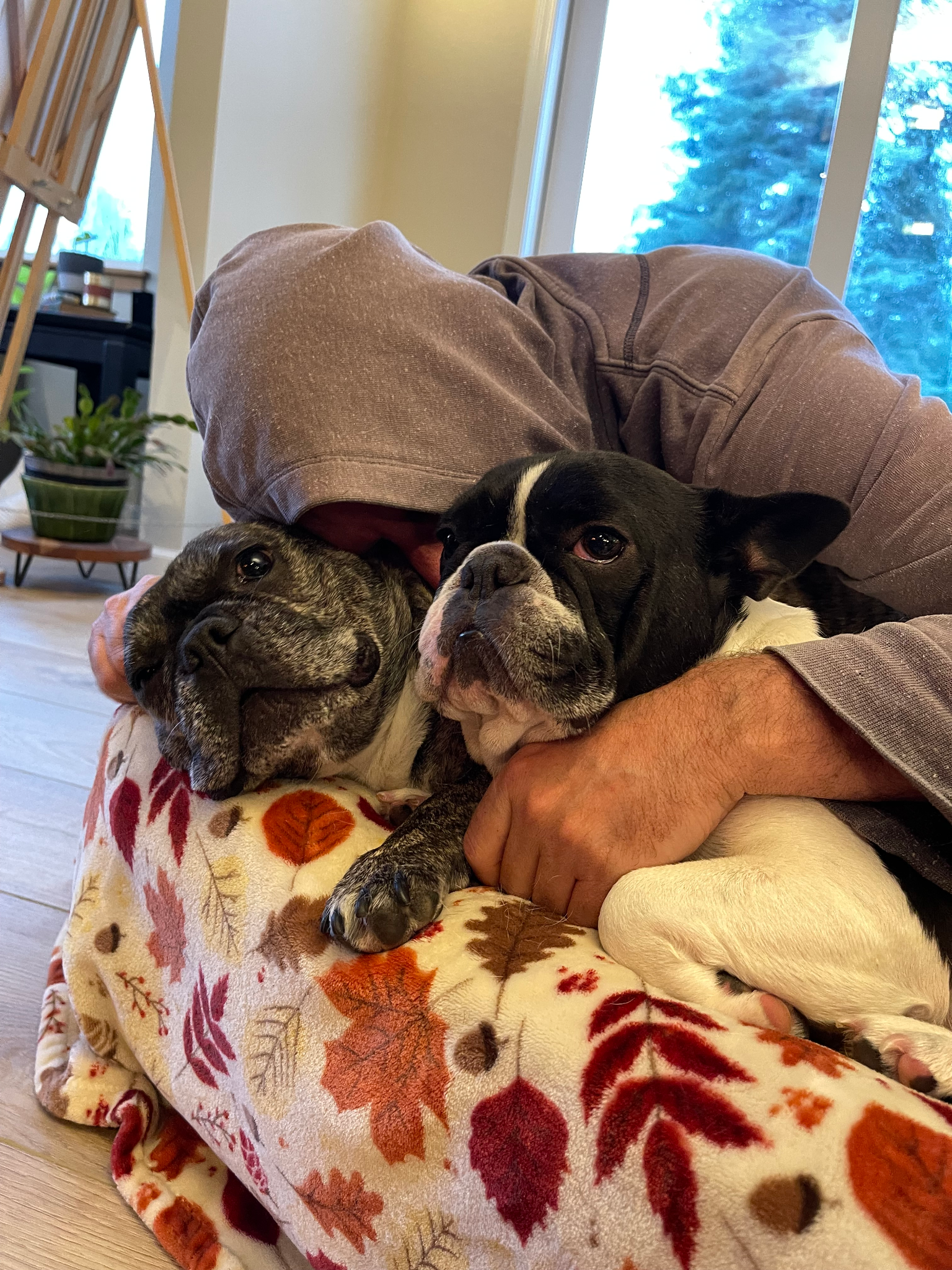
Let them decide whether to come closer. If you see that loose, wiggly, happy body language and the dog comes right up to your hand, give your fingers a tiny wiggle. Just a little bit of love. Then stop. You are not reaching toward a dog who is still stretching forward just to sniff you. You are responding to a dog who has come up and is asking for more. Do they lean in again, or do they move away? Pay attention to their answer. If they come back for more, you can give them a little more. I would rather leave a dog wanting more affection than overwhelm them with too much too soon.
If the dog hangs back, turns away, stiffens or simply does not come over, you have your answer. Leave them alone. You have not been rejected; you have learned something about how that dog feels in that moment.
This is a skill I wish we taught children as readily as we teach them to look both ways before crossing the street. Many of us grow up seeing dogs mainly in homes, on leashes or in carefully managed public spaces. We learn to admire them, photograph them and call them “good dogs,” but we do not always learn their language. Then those children become adults who expect affection on demand. That is my observation from working with families, not a claim that animal control caused the problem.
A dog is a four-legged foreign exchange student living in a human world. We expect them to understand our customs, but how often do we bother to learn theirs? A wagging tail by itself does not tell the whole story. Look at the whole dog: Is the body soft or rigid? Can the dog move away? Are they approaching again after you pause, or are they trying to create distance?
Some dogs adore meeting new people. Others prefer to share space for a while before they interact. Some would rather skip the introduction entirely. None of those choices makes a dog bad, broken or unfriendly.
And when a dog growls, that is communication. It is not an invitation to prove that you are “good with dogs.” Give them space, help everyone stay safe, and listen to what came before the growl.
The next time you meet a dog, try something radical: do less. Ask the human. Give the dog space. Let them choose whether to close it. If affection follows, you will know you built it together.
That is what I mean when I say dogs need a #MeToo movement: not a slogan on their behalf, but a change in ours. We can stop assuming that our love gives us access to someone else’s body. We can learn to listen before we touch.
Connect with Primal Needs, Instagram, and Facebook.
Women’s Insider Contributor
Women's Insider Contributor
This article features <a href="https://womensinsider.com/terms-and-conditions/" target="_blank">branded content</a> from a third party. Opinions in this article do not reflect the opinions and beliefs of Women's Insider.
This article features partner, contributor, or branded content from a third party. Members of the Women’s Insider editorial staff were not involved in the creation of this content. All views and opinions are those of the contributor alone.
Related Posts
How Navy Veteran and Father Travis Gerardi Found a New Mission in Children’s Storytelling

Karina Rodriguez Diaz Built This for Women Who Stay

Tempie W. Wade: How A Late Start Sparked An Award Winning Literary Journey

How Healing Haven Reinvented the Castor Oil Pack

Threads That Hold: Where Rigorous Coach Education Meets a Human Approach