
When a headache begins at the back of the head, the neck may be part of the story.
It starts in the same place almost every time. By mid-afternoon there’s a pressure at the base of your skull, right where your head meets your neck. You press your fingertips into it without thinking. By evening it has crept up over the back of your head, and sometimes it settles behind one eye. You take something, you go to bed early, and the next day after a few hours at the screen it begins again.
“Perpetual headache that claws my head down into my neck and lives behind my eyes,” one Artuvate customer wrote in a company survey. Another described “constant pressure at the base of my skull, along my jaw, in my ears, and a regular headache.” A third wrote, “Neck pain becomes a serious headache. If it happens while driving, I have to pull over and rest.”
Where This Kind of Headache Begins
Doctors recognize that some headaches start in the neck. They’re called cervicogenic headaches, and according to Harvard Health, they stem from an underlying problem in the bones and nearby structures of the upper neck. The pain typically starts at the back of the neck at the base of the skull and spreads up the head, usually toward the forehead and sometimes behind the eyes. It’s often on one side.
Harvard Health also notes that cervicogenic headaches account for up to 20% of chronic headaches. Many people who have them never connect the two. They treat the headache and not the neck, because the head is where it hurts most.
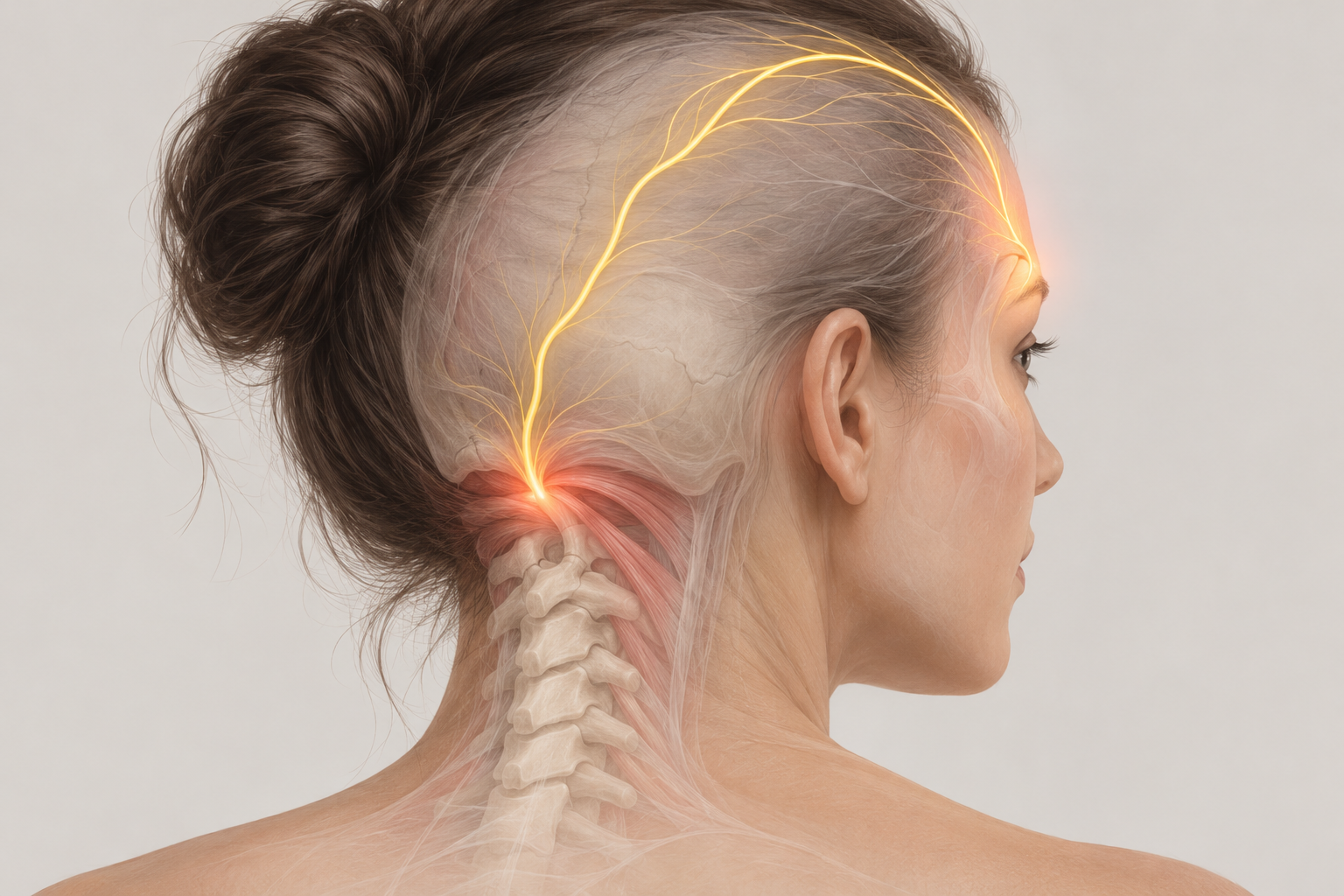
The upper neck sits right under the skull, and the nerves from that area supply the back of the head. When the joints and muscles there stay tense for hours, at a desk, looking down at a phone, or holding the head forward while driving, the discomfort doesn’t always stay in the neck.
A Clue You Can Notice Yourself
Pay attention to where it starts and what sets it off. Does the headache begin at the back of the head and move forward? Does it build after long stretches looking down at a screen, or flare when you turn your head a certain way? Harvard Health notes that neck movement and sustained awkward head positions can trigger this kind of headache.
Artuvate hears this pattern often. The company invites every customer to answer a short survey after ordering, and tens of thousands have. About two-thirds describe pressure at the base of the skull, and half describe headaches that start at the back of the head. Those are customer-reported experiences, not diagnoses. Headaches have many causes, and some people have more than one type at the same time, which is one reason a proper diagnosis matters.
When to See a Doctor
Some headaches need care right away. Get emergency help for a sudden, severe headache that feels like the worst of your life, or a headache that comes with fever and a stiff neck, confusion, vision changes, weakness, numbness, trouble speaking, or that follows a head injury. See a doctor if your headaches are new, frequent, changing, getting worse, or started after age 50. For people whose doctor has already looked into their headaches, the neck connection can be a useful thing to bring up at the next appointment.
Where Artuvate Began
Artuvate started with the founder’s mother. For years she lived with neck pain that never fully went away, and most days her answer was another round of medication. Her son started asking whether there was something she could do for herself, at home, alongside the care she already had.
“So many people we talk to have spent years treating their headaches without anyone mentioning their neck,” the company’s founder said. “We wanted to give them something simple for that spot at the base of the skull, something they could use at home at the end of the day.”
What FisioRest Is
FisioRest is a contoured neck rest you lie back on at home. It sits under the neck and the base of the skull, the area this article has been describing, and combines gentle traction-style support along the neck’s natural curve with heat and vibration massage in one session. A typical session lasts 15 to 30 minutes, usually in the evening, when the neck has had a full day of holding the head up.
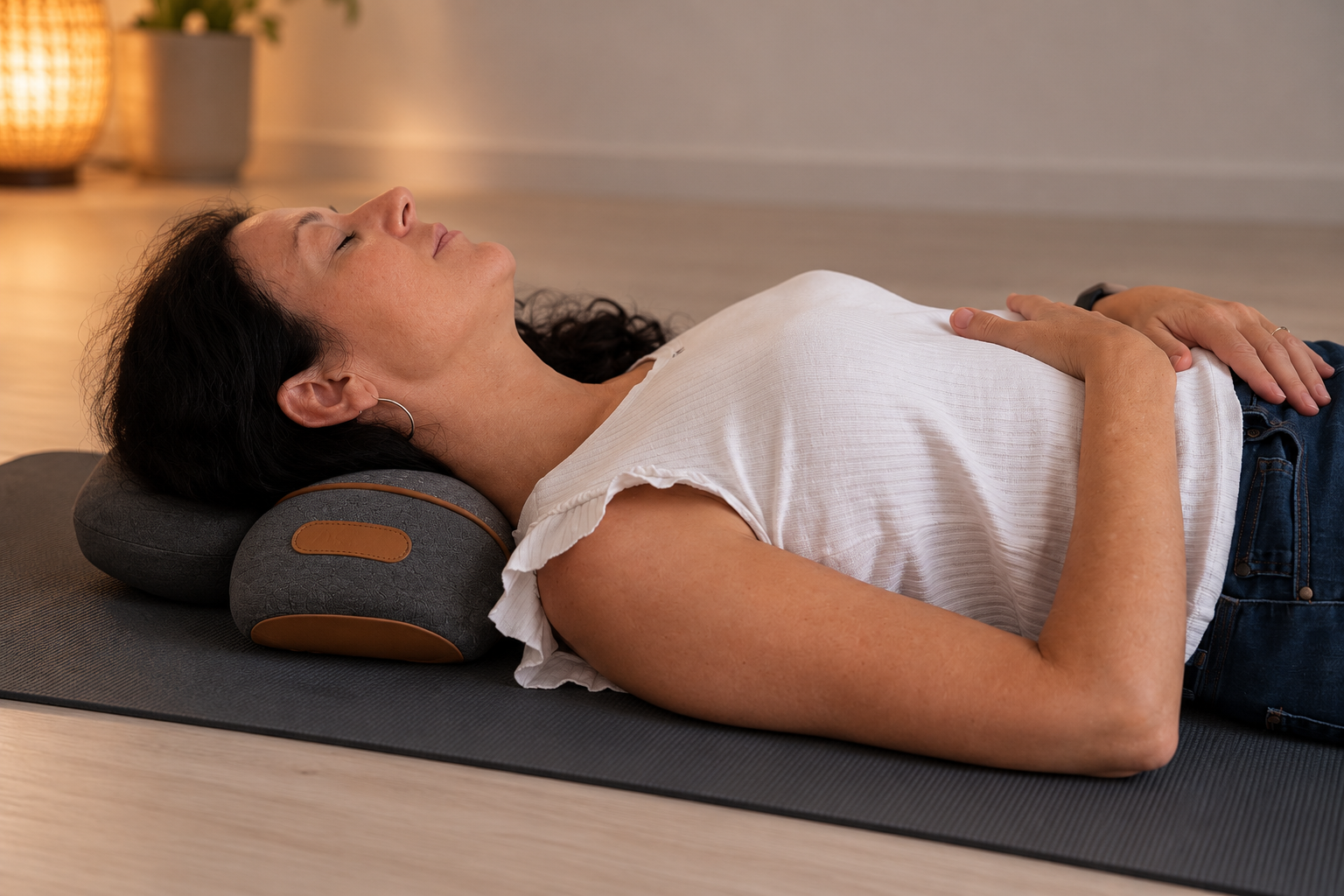
Many people already use heat or massage for a tense neck, one tool at a time. FisioRest brings support, heat, and massage together while the neck can rest.
FisioRest isn’t a medical treatment, it isn’t a headache or migraine treatment, and it doesn’t replace care from a doctor or physical therapist. It isn’t suitable for anyone who has recently had neck surgery, and people who are pregnant, have osteoporosis, or have a diagnosed spinal condition should check with their doctor first. Because what helps one person may not help another, every FisioRest comes with a 365-day trial at home and a two-year warranty.
If your headaches keep starting in the same spot at the back of your head, it may be worth paying attention to what’s happening just below it.
Learn More About Artuvate
For more information about FisioRest and Artuvate’s approach to at-home neck comfort, visit artuvate.co.
Women’s Insider Contributor
Emily R. Parker
Emily R. Parker is a lifestyle and business writer with a focus on wellness, career development, and modern leadership. Her articles highlight real-world strategies for women balancing ambition and well-being.
This article features partner, contributor, or branded content from a third party. Members of the Women’s Insider editorial staff were not involved in the creation of this content. All views and opinions are those of the contributor alone.
Related Posts

Love Without Borders: Melissa Eadeh Is Connecting Successful Singles Worldwide

JPS Law Offices Protects What Matters Most

The Woman To Woman Podcast: What Happens When Two Best Friends Stop Playing It Safe?

Academy Of Clinical Hypnotherapy Raises The Bar

Photo Club Makes Art Collecting Finally Accessible