



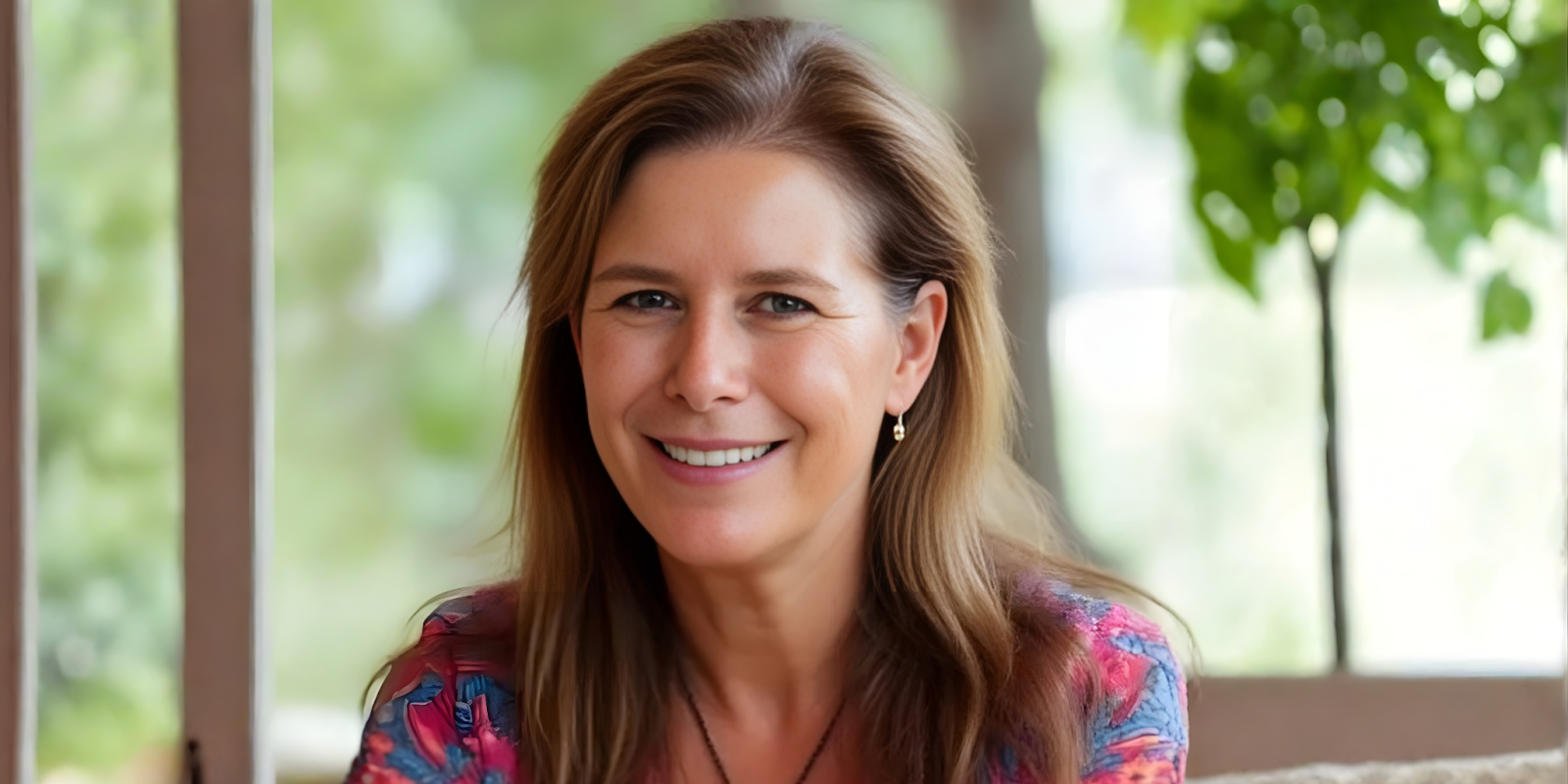
Helena Demuynck emphasizes leadership clarity for senior women leaders, highlighting how internal stability, boundaries, and discernment support leadership.
Many senior leaders today are making more decisions than ever before, yet feeling less clear about them.
The common explanation is pressure, complexity, or lack of time. But Helena Demuynck believes something deeper is happening.
According to the leadership advisor and founder of oxygen4leadership, the real issue many leaders face is not capability or confidence. It is the gradual erosion of internal clarity under sustained pressure.
For senior women leaders in particular, this dynamic often remains invisible while the expectations placed on them continue to increase.
When Leadership Becomes a Constant Response
Modern leadership environments are defined by speed, visibility, and constant decision-making.
Executives are expected to respond quickly, remain available, and maintain performance even as organisational demands grow more complex. While many leaders manage this successfully for long periods, the cost is often cumulative.
Over time, leadership can begin to feel reactive rather than deliberate.
“Many leadership challenges are not strategy problems,” Demuynck explains.
“They are capacity problems. When leaders are constantly responding to pressure, clarity becomes harder to maintain.”
In these conditions, even highly capable leaders can experience subtle shifts in their decision-making: increased hesitation, reduced discernment, and a growing sense of cognitive overload.
The Hidden Weight Carried by Women Leaders
Women in senior leadership roles frequently carry an additional layer of responsibility.
Beyond operational performance, they are often expected to maintain relational cohesion within teams, manage organisational dynamics, and absorb emotional tension within the system.
While these contributions are rarely written into formal job descriptions, they significantly shape how leadership roles are experienced.
Over time, this invisible labour can compound the decision pressure already present in senior positions.
The result is not necessarily visible failure. In fact, many leaders continue to perform extremely well.
But internally, leadership may begin to feel heavier than it needs to be.
Clarity as a Leadership Capability
Demuynck’s work focuses on what she describes as the internal architecture of leadership.
Rather than concentrating only on skills, communication techniques, or performance strategies, she examines the conditions that allow leaders to remain clear and effective under sustained responsibility.
“Leadership clarity does not come from working harder,” she says.
“It comes from the stability of the internal system that makes decisions.”
When leaders are operating from a stable internal state, several things change:
Decisions become easier to make. Boundaries become clearer. Authority becomes more consistent.
Without that internal stability, leaders often find themselves compensating with increased effort or constant adaptation.
Boundaries as Structural Leadership
One of the most misunderstood aspects of leadership effectiveness is the role of boundaries.
In many organisations, boundaries are treated as personal preferences, something negotiable or situational.
Demuynck sees them differently.
“Boundaries are not about protecting your time,” she says.
“They protect the quality of your leadership.”
When leaders operate without clear structural boundaries, their attention becomes fragmented. Decision-making slows down, and leadership begins to rely on reaction rather than discernment.
Re-establishing those boundaries is therefore not a matter of self-care, but of leadership effectiveness.
Why This Conversation Is Becoming More Important
As organisations continue to operate in increasingly complex environments, the demands placed on leaders are unlikely to decrease.
Decision cycles are accelerating, information flow is expanding, expectations around responsiveness continue to rise.
In this context, the ability to maintain clarity under pressure is becoming one of the most valuable leadership capabilities.
For Demuynck, this shift requires a different understanding of leadership development.
“Leadership is not only about what leaders do,” she says.
“It is also about the internal conditions from which they lead.”
For senior women leaders navigating complex environments, strengthening those internal conditions may ultimately be what allows leadership to remain both effective and sustainable.
About Helena Demuynck
Helena Demuynck is a transformation catalyst working with senior women leaders and executives navigating complex leadership environments. Her work focuses on strengthening clarity, discernment, and sustainable leadership authority under pressure.
Helena is the founder of oxygen4leadership, where she develops frameworks that help leaders operate with greater coherence and decision quality in demanding roles.
She is a talk show host, podcast guest, author, and creator of smart online leadership applications.
https//www.oxygen4leadership.com
