



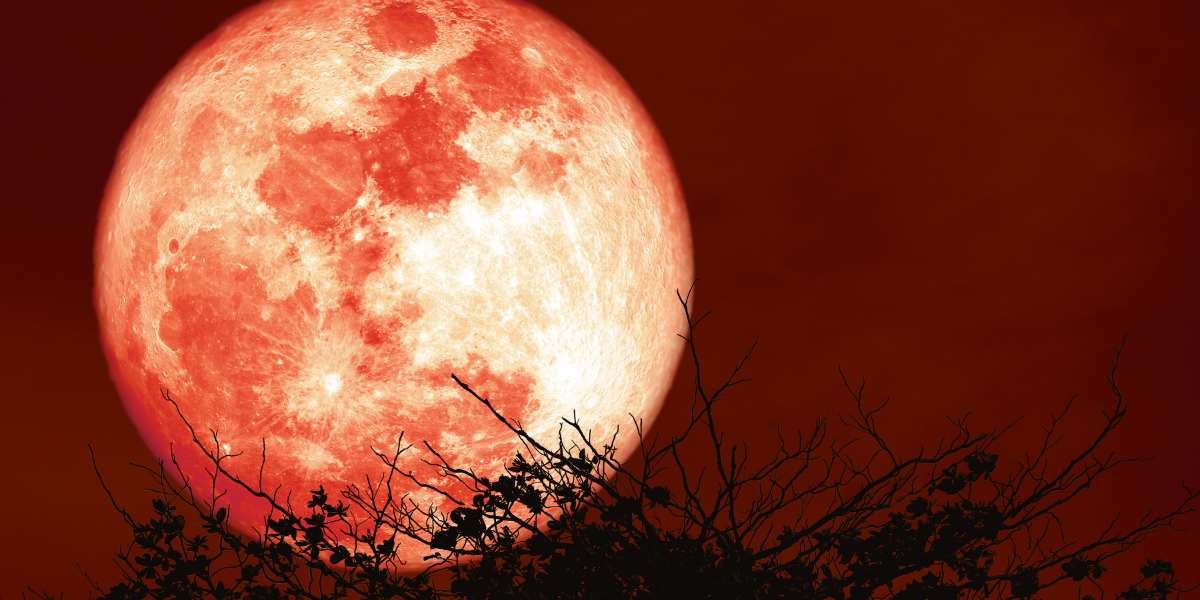
In the early hours of Tuesday morning, millions of Americans looked skyward to witness a striking celestial event, a total lunar eclipse that transformed the full Moon into a glowing red orb. Commonly referred to as a “blood moon,” the phenomenon was visible across much of the United States and marked the only total lunar eclipse that will be seen anywhere in the world until 2028.
A total lunar eclipse occurs when the Earth moves directly between the Sun and the Moon, casting a shadow that completely covers the lunar surface. Unlike a solar eclipse, which requires protective eyewear, a lunar eclipse is entirely safe to view with the naked eye. During totality, sunlight passing through Earth’s atmosphere bends and scatters, filtering out shorter blue wavelengths and allowing longer red and orange hues to reach the Moon. The result is a dramatic copper or crimson glow that can vary in brightness depending on atmospheric conditions.
A Coast-to-Coast Viewing Experience
The March 3 eclipse unfolded over several hours, beginning with a subtle dimming as the Moon entered Earth’s outer shadow, known as the penumbra. As it progressed into the darker central shadow, the umbra, a curved shadow gradually crept across the lunar surface. The most anticipated stage, totality, lasted just under an hour. During this time, the Moon appeared fully immersed in Earth’s shadow, radiating a deep red tone before slowly brightening again as it exited.
Because the eclipse occurred in the pre-dawn hours, viewing times varied slightly by time zone. However, clear skies across large portions of the country allowed many people, from the West Coast to the Eastern Seaboard, to experience the event in full. For some regions, the eclipse was still visible as the Moon dipped toward the horizon, creating a dramatic pairing of the reddish Moon against early morning light.
No special equipment was required to enjoy the spectacle. While binoculars and telescopes enhanced details and intensified the color, many viewers simply stepped outside into backyards, balconies, and neighborhood parks. Astronomy clubs and local science organizations also hosted early-morning watch gatherings, offering guided explanations and telescopic views for families and enthusiasts.
Why This Eclipse Was Significant
Although lunar eclipses are not uncommon, this particular event stood out because it is the last total lunar eclipse that will occur until late 2028. That three-year gap heightened anticipation among astronomy followers and casual skywatchers alike. Events with such broad visibility across North America are relatively rare, making this an especially meaningful experience for those who value shared national moments.
Astronomers emphasize that lunar eclipses offer more than visual beauty, they provide insight into the mechanics of our solar system. The alignment required for a total lunar eclipse highlights the precise gravitational dance between the Earth, Moon, and Sun. These predictable cycles have been studied for centuries, yet they continue to inspire awe in modern audiences.
The red coloration also offers subtle scientific clues. The exact shade and brightness of the Moon during totality can reflect the amount of dust or particles in Earth’s atmosphere. Volcanic eruptions or increased atmospheric pollution, for example, can influence how dark or vibrant the eclipse appears.
Community, Reflection, and Inspiration
Beyond science, the eclipse created a shared cultural experience. Social media platforms quickly filled with photographs capturing the red Moon suspended above city skylines, rural landscapes, and iconic landmarks. Amateur photographers experimented with long exposures, while families bundled in blankets shared quiet moments beneath the night sky.
For many women balancing careers, family life, and personal goals, the early-morning event offered a rare pause, a reminder of the natural rhythms that continue beyond daily responsibilities. Observing such a vast cosmic event can inspire reflection, grounding viewers in a broader perspective that transcends everyday stress.
Educators also noted an increase in interest from students eager to learn about astronomy. Events like this often spark curiosity in young girls and women considering careers in science, technology, engineering, and mathematics (STEM). Seeing celestial mechanics in action can transform textbook concepts into vivid, memorable experiences.
Looking Ahead
While the next total lunar eclipse will not occur until 2028, skywatchers can look forward to other astronomical highlights, including meteor showers and planetary alignments in the coming months. Many astronomy organizations encourage people to download stargazing apps, join local clubs, or attend observatory programs to stay connected with future events.
The March 3, 2026 blood moon served as a powerful reminder that some of the most extraordinary experiences are accessible to everyone. With no tickets required and no equipment necessary, millions of Americans simply stepped outside and looked up, participating in a moment that was at once scientifically profound and deeply personal.
As the red glow faded and the Moon returned to its familiar silvery-white hue, the spectacle left behind more than photographs. It offered wonder, unity, and a renewed appreciation for the intricate beauty of the universe.
