



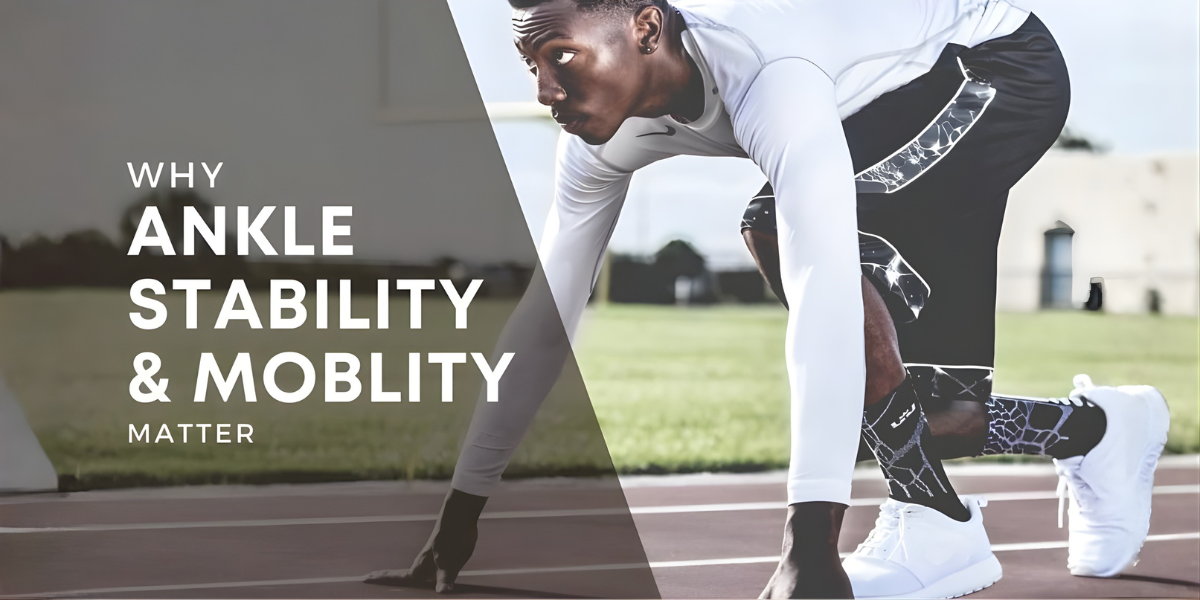
Women face unique biomechanical challenges in high-intensity workouts, making ankle stability a crucial factor in their performance and injury prevention.
High-intensity workouts have become a staple in the fitness world, offering effective and transformative results. Whether it’s explosive jumps, rapid direction changes, or intense lifts, these exercises demand not only cardiovascular endurance and muscle strength but also foundational stability. Among the many muscles and joints involved, the ankle plays a particularly crucial role in ensuring safety and performance.
While ankle stability is important for everyone, it holds even more significance for women. The reasons for this heightened need go beyond just injury prevention; they involve optimizing performance and ensuring long-term engagement in high-intensity fitness regimens.
Understanding Biomechanical Differences
The human body is complex, and while men and women share many fundamental anatomical structures, subtle differences impact movement patterns, muscle activation, and the overall susceptibility to injury. These differences are especially evident when engaging in high-intensity exercise.
Aaron Burns, CEO of Z ATHLETICS Inc. — Ankle Brace for Women & Men with over 12,000+ orders on Amazon, explains backed-by-data, “More women are embracing high-intensity training, but with this comes greater ankle stress and a higher risk of missteps or sprains. Our Z Athletics ankle brace offers firm support without restricting mobility, helping to preserve ankle alignment during dynamic movements like jumps. For many active women, it’s the difference between pushing harder with confidence and holding back to avoid injury.”
As Benson Kuria Macharia, CTO of TranslitePharma says, “One of the main biomechanical differences is women’s broader pelvic structure, which leads to a greater Q-angle. This angle impacts knee alignment and, ultimately, ankle mechanics, putting extra strain on the ankle as it tries to compensate for misalignments in the lower body.”
Women also tend to have greater joint laxity due to the effects of estrogen on ligament and tendon flexibility. While this provides greater range of motion, it reduces passive stability in the ankle, increasing reliance on active muscle support. If muscles are fatigued or underdeveloped, the ankle becomes more prone to injury.
The Impact of Hormones on Connective Tissues
The role of hormones, especially estrogen and progesterone, in women’s athletic performance cannot be overstated. These hormones significantly affect connective tissues, making them more elastic at certain times of the menstrual cycle.
Joseph Kim, Founder of Incellderm, notes, “Just as we focus on enhancing skin resilience, the body’s connective tissues need the same care, particularly when it comes to ankle stability. The natural ability of the body to adapt to biomechanical forces, including hormonal fluctuations, directly influences ankle health.”
Estrogen increases joint looseness by making ligaments and tendons more flexible. At times when estrogen levels peak, such as during ovulation, this can contribute to instability in the ankle joint. Progesterone also influences tissue elasticity, creating a fluctuating environment that can impact ankle stability.
As Daniella Levy, CEO & Co-Founder at Happy V, notes, “The interplay of estrogen and progesterone throughout the menstrual cycle profoundly impacts the biomechanics and structural integrity of connective tissues. This isn’t just a localized effect; these hormonal fluctuations create a systemic environment where tissue laxity can increase, elevating the risk of injuries like ankle sprains during specific phases, such as ovulation when estrogen levels peak.”
Understanding this dynamic is vital for female athletes. The increased joint laxity during high-intensity workouts makes the body more reliant on muscle strength and neuromuscular control to stabilize the ankle. Without robust muscular support, the risk of injury rises significantly.
Increased Risk of Specific Injuries
Due to their unique anatomical and hormonal makeup, women are at a higher risk of lateral ankle sprains during high-intensity workouts.
Sharon Amos, CEO of Air Ambulance 1, points out, “Women’s increased susceptibility to ankle sprains during high-intensity training underlines the importance of early assessment and comprehensive injury management. A sprained ankle can halt progress, and repeated sprains can lead to chronic instability if not addressed properly.”
The combination of a wider Q-angle and greater joint laxity means that even a small misstep during activities like plyometrics or box jumps can lead to a more severe injury. As the ankle struggles to compensate for these structural differences, injuries become more likely.
In fact, the repetitive stress from high-impact movements can also cause long-term conditions like Achilles tendinopathy if the ankle isn’t adequately supported. For women, robust ankle stability isn’t just a matter of preventing one-off injuries; it’s about maintaining consistent and safe training over time.
The Role of Neuromuscular Control
An often-overlooked but essential factor in ankle stability is neuromuscular control, the body’s ability to coordinate muscle activation for stability. This is especially critical for women, whose biomechanical and hormonal differences place additional stress on the ankle joint.
Htet Aung Shine, Co-Founder of NextClinic, explains, “Neuromuscular control plays a fundamental role in injury prevention. It ensures the body responds quickly to unexpected movements, like jumps or pivots, stabilizing the ankle and preventing sprains.”
During high-intensity exercises, rapid movements demand quick adjustments from the ankle joint. The nervous system provides feedback to muscles, allowing them to contract at just the right moment to absorb impact and stabilize the joint. Without effective neuromuscular control, the ankle may roll before muscles can react, leading to injury.
As Michael Van-Dongen, Founder of Crown Supplements, notes, “While dedicated training for ankle control is fundamental, it’s essential to pair this with nutritional strategies that support sustained neuromuscular function. Micronutrients like magnesium and potassium are vital for optimal nerve impulse transmission, and adequate energy substrates help delay the onset of fatigue that directly compromises stability and heightens injury risk during extended activity.”
Furthermore, fatigue decreases neuromuscular control, increasing the risk of injury as a workout progresses. This makes it essential for women to focus on training their ankle’s ability to respond dynamically to the demands of high-intensity training, even under fatigue.
Practical Strategies for Enhancing Ankle Stability
Given the specific challenges women face in high-intensity workouts, implementing strategies to enhance ankle stability is crucial. These strategies should be comprehensive, focusing on strength, proprioception (body awareness), and dynamic neuromuscular control.
Dr. Mark El-Hayek, Head Chiropractor & Clinic Director at Spine and Posture Care, emphasizes, “Ankle stability isn’t just about the ankle joint itself. It’s a part of the entire kinetic chain. Proper spinal alignment and core stability also play a role in ankle health. Without foundational support from the spine, even the best ankle exercises can fall short.”
Single-leg balance exercises are a great place to start. Women can incorporate these into their warm-ups or cool-downs. Begin with simple balance drills, like standing on one leg for 30-60 seconds, and progress to more complex tasks like balancing on an unstable surface or closing the eyes. These exercises train proprioception, improving the body’s ability to sense and correct imbalances that could lead to injury.
Dynamic exercises such as single-leg hops, walking lunges, and plyometric drills (e.g., box jumps) also help to mimic real workout demands. These movements challenge the body to stabilize the ankle under dynamic conditions. Proper landing mechanics, such as absorbing shock with flexed knees and hips, are crucial for preventing injury.
Conclusion
For women engaged in high-intensity workouts, strong ankle stability is a non-negotiable component of performance and injury prevention. Addressing the unique biomechanical and hormonal challenges through targeted training strategies, such as dynamic balance exercises, resistance training, and neuromuscular control, can significantly reduce injury risk and enhance overall performance.
Incorporating these practices into a regular workout routine will help ensure that women can train consistently, safely, and effectively for years to come.
