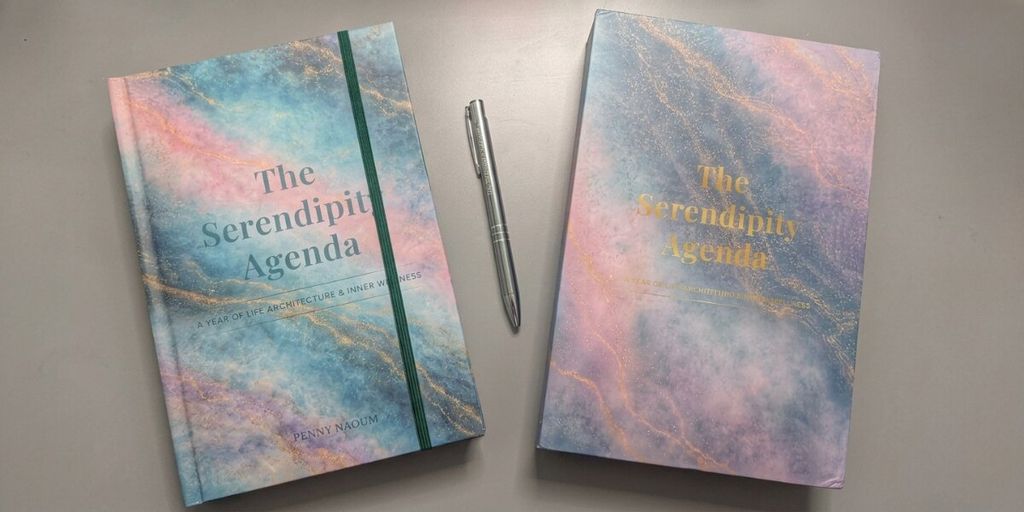
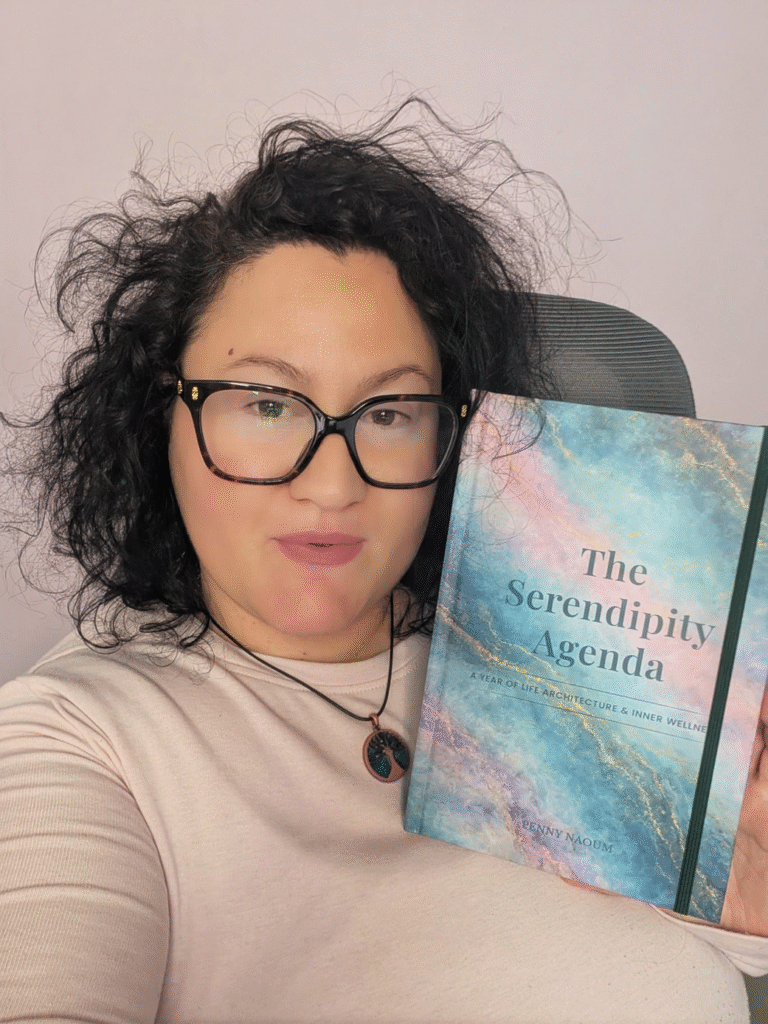
Penny Naoum created The Serendipity Agenda as a gentler way for women to reconnect with health, ambition, relationships, and daily priorities.
Penny Naoum did not create The Serendipity Agenda because she needed another notebook. She created it because too many parts of her life were being treated as separate problems. Work sat in one place, sleep in another, mood somewhere else, and personal goals were often left competing for attention. The more information she gathered, the harder it became to see the person behind all those individual data points.
That experience became the starting point for an idea that now sits at the heart of The Serendipity Agenda: people live whole lives, yet many of the systems designed to help them ask them to divide those lives into separate categories. For women already carrying professional responsibilities, relationships, family expectations, personal ambitions, and the invisible work of keeping everything moving, that fragmentation can become another source of pressure.
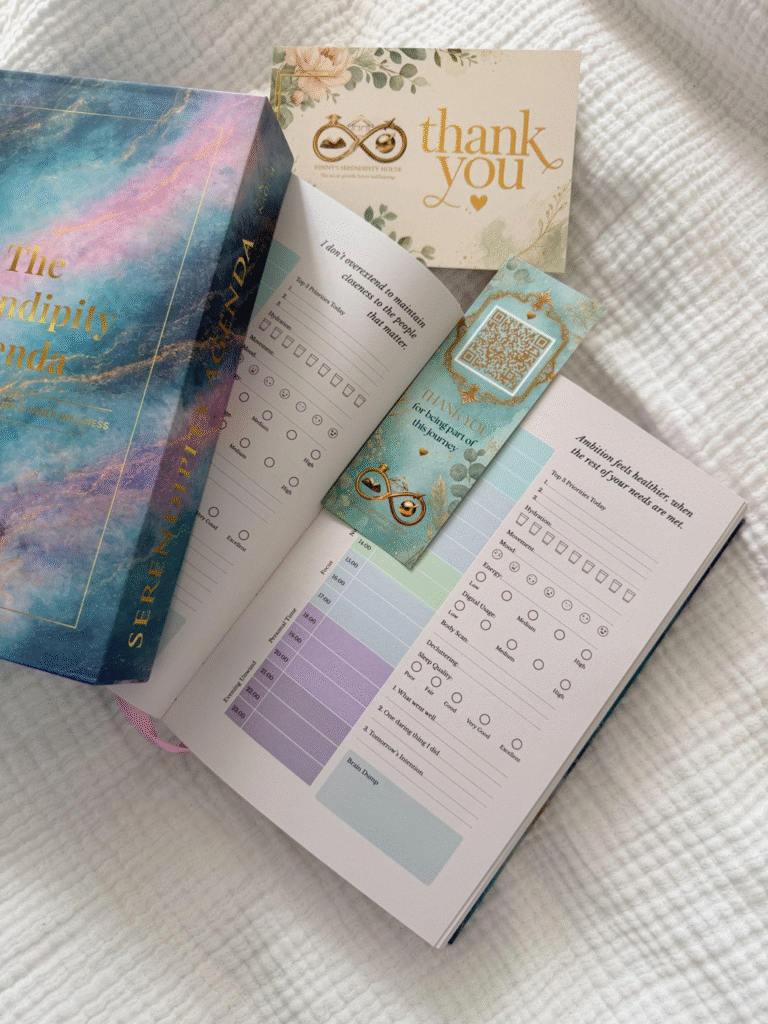
The Serendipity Agenda offers a different approach. It is an undated, evergreen life architecture agenda and guided journal designed to bring several parts of everyday life into one offline space, with enough structure for a complete year. Rather than requiring another app, another notification, or another system to maintain, its one page daily structure can be completed in around 60 seconds.
When Self Improvement Starts Feeling Like Another Job
The modern language of wellbeing often comes with a surprising amount of administration. One app tracks sleep. Another records movement. Another encourages mood entries. There may be reminders for hydration, productivity, meditation, habits, goals, or screen time. Each tool may appear useful on its own, but together they can create a new form of mental load.
For someone already feeling overwhelmed, even traditional journalling can present a problem. A blank page offers unlimited possibilities at precisely the moment when too much choice can make it harder to know where to begin.
Naoum encountered that tension personally during a demanding period that combined intense professional responsibility, team building, and a complex three year journey through burnout and personal health challenges. While managing appointments, she found herself carrying notebooks, Post-its, and phone applications to record different information for different purposes.
The process of bringing those fragments together became exhausting.
The deeper realisation was that the fragmentation itself was part of the problem.
“I did not need another place to write more lists. I needed one place that could show me how the different parts of my life were affecting one another,” Naoum said.
One Page For The Whole Picture
The Serendipity Agenda was developed around that insight. Its design brings together areas such as top priorities, hydration, movement, mood, digital usage, sleep quality, and a brain dump in a simple daily structure.
The purpose is not to create a perfect record of every day. Instead, it gives users a defined place to pause, notice what is happening, and make a more intentional choice about what deserves attention.
The agenda uses the S.E.R.E.N.D.I.P.I.T.Y. Method™, a cyclical 11 step framework for reflection, self leadership, and intentional living. Its trackers and reflective questions also change across weekly, monthly, quarterly, and annual use, giving readers opportunities to notice patterns and progress as they move through the book. Every quotation was written by Naoum specifically for the Agenda, creating a consistent reflective voice throughout the full-year journey.
Beyond the daily structure, the Agenda includes broader health and wellbeing education, practical habits, sleep hygiene, nutrition-aware reflection, hormone and gut-health awareness, personal boundaries, and neuroscience-informed ideas about self-leadership. It also explores the distinction between the CEO self that manages responsibilities and the Human CEO who must remain connected to health, energy, relationships, and meaning. Together, these elements make the Agenda more than a traditional planner: it is a year-long framework for making intentional choices across the whole of life.
Because it is undated, there is no prescribed starting point. A reader can begin at any point in the year, use several pages when life feels full, or return after an absence without having to complete every missed day.
That flexibility is deliberate.
No Catch Up, No Guilt
Traditional dated planners can create an uncomfortable psychological trap. Miss several days and the empty pages can begin to feel like evidence of failure. Eventually, the exact tool intended to support you becomes something to avoid.
The Serendipity Agenda removes that pressure by allowing readers to use it nonlinearly. It is closer to what Naoum describes as a “wellness wardrobe” approach. Users can choose what they need when they need it and leave other elements for another time.
“Some days you will use several pages. Other days one honest word will be enough. The value is not perfection. It is learning how to return to yourself,” Naoum said.
That principle makes the agenda adaptable to changing seasons of life. A person might use it to clarify priorities during a demanding working week, reflect on relationships during a quieter period, or simply record a thought before moving on with the day.
It can also provide a practical place to continue reflections or intentions developed through therapy, retreats, coaching, or other personal development practices, without presenting itself as a medical or psychological tool.
A Life That Does Not Fit Into Separate Boxes
Perhaps the most distinctive idea behind The Serendipity Agenda is its refusal to separate ambition from wellbeing.
Women are often encouraged to think about professional achievement, physical health, relationships, emotional wellbeing, finances, and personal development as different projects. Yet real life rarely respects those boundaries.
Poor sleep can affect concentration. Relationship tension can change energy levels. Professional pressure can alter personal routines. A demanding season at home can influence ambition. Conversely, achieving something meaningful at work can affect confidence and motivation elsewhere.
“We are not separate versions of ourselves. What happens in our health affects our work. What happens in our relationships affects our energy. The dots were always connected,” Naoum said.
The agenda therefore approaches personal development as a connected experience rather than a collection of isolated targets.
For the woman who has spent years being the dependable one, the organiser, the achiever, or the person everyone else relies upon, that can offer something more valuable than another productivity system. It creates permission to stop, notice, and return to herself without needing to earn that pause.
Build A More Intentional Life, One Minute At A Time
The Serendipity Agenda is ultimately less about doing more and more about seeing more clearly. Its offline format offers an alternative to constant digital tracking, while its guided structure provides direction without demanding rigid routines.
Readers interested in exploring the agenda can visit The Serendipity Agenda and discover more about Penny’s wider work through Penny’s Serendipity House. Those who want to learn more about Naoum and the experiences behind her work can visit About Penny.
Readers can also follow Penny’s work and ideas through Instagram, connect with her professionally on LinkedIn, or explore her longer form writing through Substack.
For readers who have grown tired of measuring every part of life through another screen, The Serendipity Agenda offers a simpler invitation: put the phone down, take a minute, and look at the whole picture.
There is no deadline to begin. There is nothing to catch up. There is no requirement to get every day right. There is simply a place to return to, whenever life calls for it.
Women’s Insider Contributor
Rachel M. Collins
Rachel M. Collins specializes in entrepreneurship, media, and contemporary culture. She writes with a reader-first approach, blending clarity with thoughtful storytelling.
This article features partner, contributor, or branded content from a third party. Members of the Women’s Insider editorial staff were not involved in the creation of this content. All views and opinions are those of the contributor alone.
Related Posts

Elegant Bookkeeping Turns Chaos Into Clarity

SuperQueen AI® Is Bringing Predictive Intelligence to Women First
Nicoletta Consumi Named An Unstoppable Woman 2026 As Years Of Strategy Turn Into Recognition

RiseHer Roadmap Helps Entrepreneurs Turn Business Complexity Into A Clear Path For Growth
Dr. Don MacDonald On Polyvagal-Informed Chiropractic