



Written by: Nicole Figot
Four women entrepreneurs in Mexico City shared candid lessons on building a business, emphasizing passion, honesty, sustainability, and letting go of control.
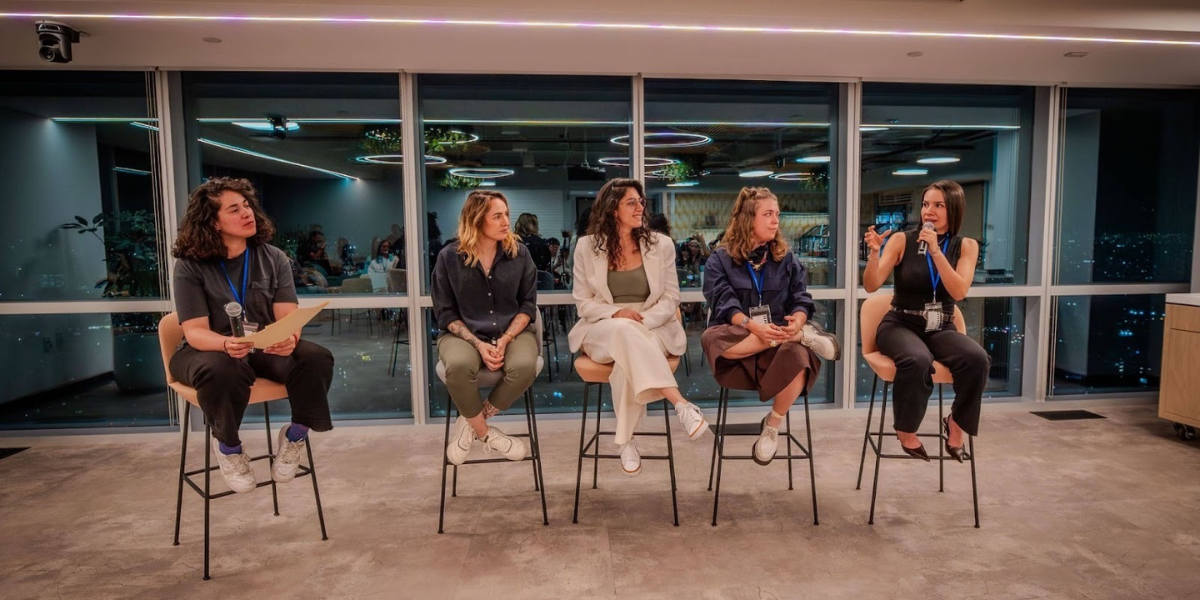
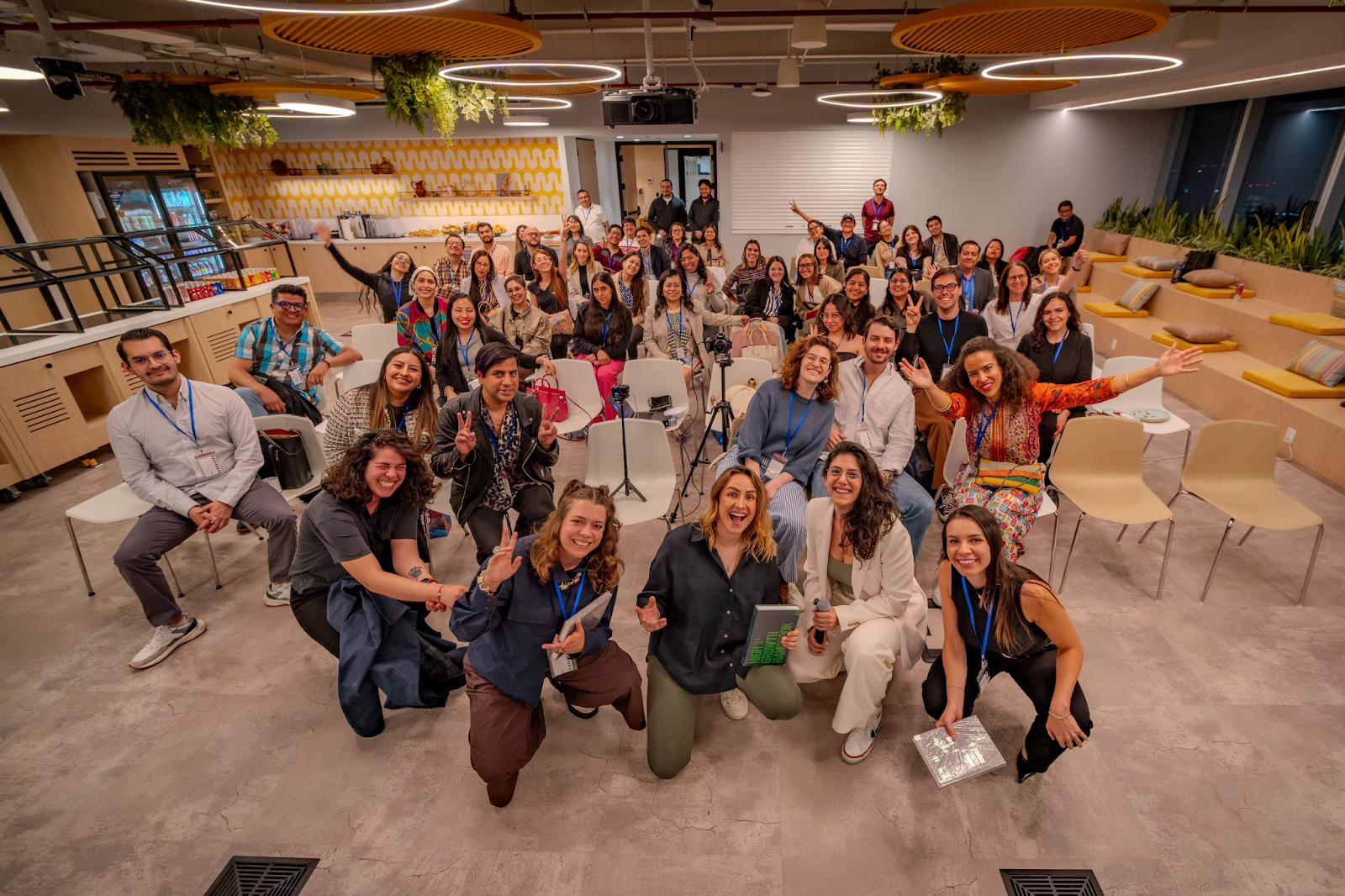
On a heavy traffic weekday night in the heart of Mexico City, the kind where getting anywhere feels like a small victory, a full room gathered for the event titled ‘Rómpela en los Negocios: Women’s Edition’ to hear four women talk honestly about what it actually takes to build something of your own. And it delivered on its premise: no motivational speeches, just direct, sometimes uncomfortable, but always useful conversation. One of the most valuable things about the night was the genuine vulnerability from the panelists in sharing some of their setbacks and even mistakes, and how they moved forward. They were candid about the gap between what entrepreneurship looks like from the outside and what it actually is.
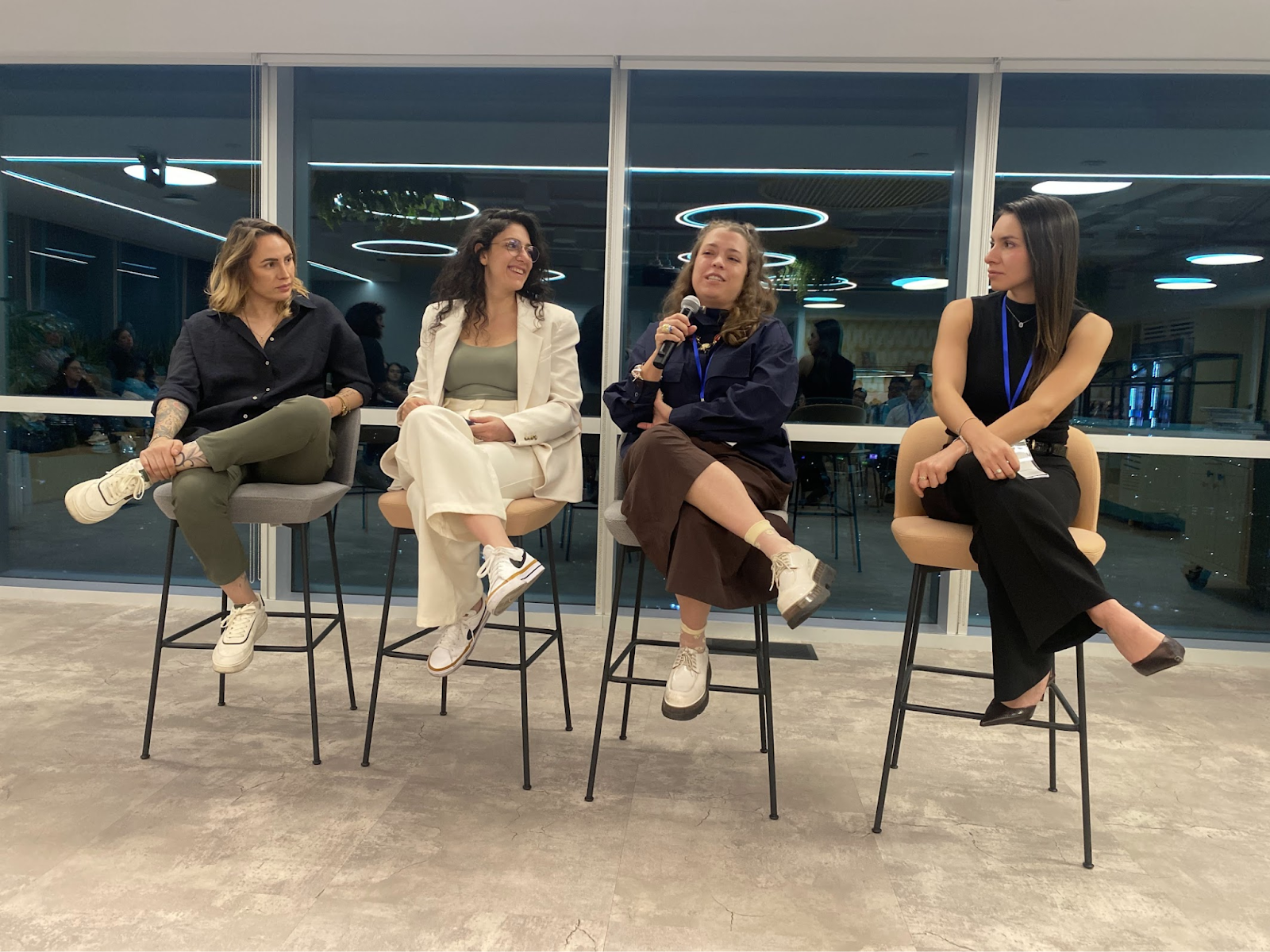
The four panelists couldn’t be more different on paper: Margot Duek (@margotduekk) is an AI strategist and consultant helping businesses effectively integrate AI. Diana Victoria Lomelí (@victoria.emprende) founded Victoria Emprende, one of Mexico’s largest entrepreneurship communities. Andrea Nash (@andreas_nash) is a tattoo artist who founded both Amuletto Tattoo Studio and XIXI Fundación, which focuses on oncological tattooing and healing. Sofía Castellanos (@sofiacastellanosart) is a visual artist and muralist recognized by Forbes, with collaborations that include Nike, Fendi, and Bombay Sapphire. Four very different paths, yet they all have learnt similar lessons, which they shared with the audience to inspire and help other entrepreneurs.
Key Lessons Shared by the Panelists:
- There’s no perfect time to start. None of the panelists had a clear, linear path to entrepreneurship. Instead, their passion and circumstances drove them. Whether it was the need for more income or recognizing that traditional work structures didn’t align with their strengths, they found entrepreneurship to be the answer. A tool they didn’t have as they started, but they recommended others use: AI tools now offer resources for early-stage entrepreneurs to navigate the basics and start their businesses.
- As you begin, show people what you do. Not everyone can imagine a product or service in the abstract, they need to see it, touch it, hear from someone who has experienced it. Sofía started painting for people she knew, which made the work visible. That visibility became commissions. You don’t need a perfect portfolio or a big budget. You need something real in the world that people can point to.
- Know every part of the business, even the parts you hate. While you can delegate, you must still guide and ensure you’re aware of all aspects, including financial management. Don’t ignore it or assume you’re good at it, mistakes can be costly. Build reserves and seek help from experts. The money you don’t track, disappears.
- Find a sustainable pace that works for you. Victoria shared something that felt important to say out loud in a culture that glorifies the grind: she was pushing herself at an unsustainable pace: waking at 5am, working nonstop, chasing the hustle playbook, and was nearing burnout when she realized that she would reach her goals not by working harder but by working at a pace she could actually maintain. Consistency over intensity. A sustainable rhythm gets you further than a sprint that leaves you depleted.
- Delegation vs. control is a real tension, and it doesn’t resolve cleanly. Control and the challenges with delegating came up as a trait they all share. You are responsible for everything. You cannot do everything. The path forward involves building a team you trust, giving them room to work, and accepting that real growth requires letting others carry parts of the weight. It’s uncomfortable. It’s also necessary.
- Treat yourself like an employee. This was one of the most resonant pieces of advice of the night that Andrea repeatedly made the case for. This means paying yourself a real salary and benefits. Take time off. Recognize that you are an integral part of the business and not a resource to be depleted indefinitely in service of the company. If you burn out, the business suffers. Treat your own wellbeing with the same seriousness you would apply to any other critical operating need.
- Sometimes you’ll have to make hard choices. Andrea went through a painful split with her business partners when she realized it was no longer equal or serving her. Meanwhile, Margot raised her prices fourfold after a mentor helped her see that her rates didn’t reflect the quality or value she was delivering. She lost a lot of clients. But the ones who stayed, and the new ones who came, understood her value, and for the first time, she was able to properly invest in her business and meet the company’s actual financial needs. It’s a story about self-worth as much as pricing strategy.
- Learn to say No. Every one of the panelists talked about learning to say no, and how long it took. As women are often raised to please, saying no to a client, a project, or a collaboration can feel almost physically uncomfortable. But every one of them identified it as one of the most important skills they’ve developed. Saying no protects your time, your energy, your standards, and ultimately your business. Honesty with clients goes hand in hand with this. Be clear about what you can do, what you can’t, and what they should realistically expect. The short-term cost of an honest conversation is almost always smaller than the long-term cost of overpromising.
- Being a woman in business can have its challenges, don’t focus on the closed doors, focus on the open ones. Yes, challenges exist. One panelist even described a client who kept asking to speak with the owner, unwilling to believe the woman in front of him was the one in charge. These things do happen. But the collective perspective was clear: spending energy on closed doors is a drain you can’t afford. Turn around, find the people opening doors. There are allies everywhere, both men and women. Let the haters figure themselves out.
- Partnerships are like marriages. Do your research. Don’t be fooled by a curated social media presence; investigate the person seriously, talk to people who’ve worked with them, understand who they actually are. Think clearly about what gaps you have and whether this person fills them. And once you’ve decided to bring someone in, listen to them. You chose them for a reason. But remember to always have a strong contract. Even with friends or people you’ve worked with before and trust completely. Things can go well without one, but if they don’t, the fallout can be devastating.
- When hiring, character comes first. You will spend most of your waking hours with these people. Skills can be taught; attitude is harder to change. Hire people who are genuinely good, committed, and capable of trusting you as a leader, and in return, build an environment they want to be in and treat them well.
- You will never know everything, and that’s fine. Making mistakes is a part of it. No matter how experienced you get, there will be mistakes. The goal is not to avoid them but to stay humble enough to keep asking for help and learning from people who have been where you’re going.
- There are real myths around entrepreneurship. The idea that you’ll have freedom and no schedule? What you actually get is a non-schedule, because you’re working all the time. It’s like having a baby: it demands everything at the beginning, and as it matures the direct demands ease, but the problems get bigger. It is, as one of them put it, like parenthood: genuinely beautiful, and genuinely hard.
The idea that if you love what you do, it won’t feel like work? It will feel like work. It will feel like more work than your old job. The difference is that it’s yours, and that matters. Being an entrepreneur is not for everyone, and that’s fine. But if you really want it and you’re willing to do the work, it is absolutely available to you, and it can be the most satisfying thing you ever do.
 Rómpela en los Negocios: Women’s Edition was organized by Stripe Community CDMX, a community-led initiative backed by Stripe to strengthen the local entrepreneurial ecosystem. While community-led, the event carried Stripe’s backing and brought together entrepreneurs and builders from across the region.
Don’t miss out on future updates! Watch the live session on YouTube, and make sure to follow me on social media to dive deeper into the world of AI and entrepreneurship.
