



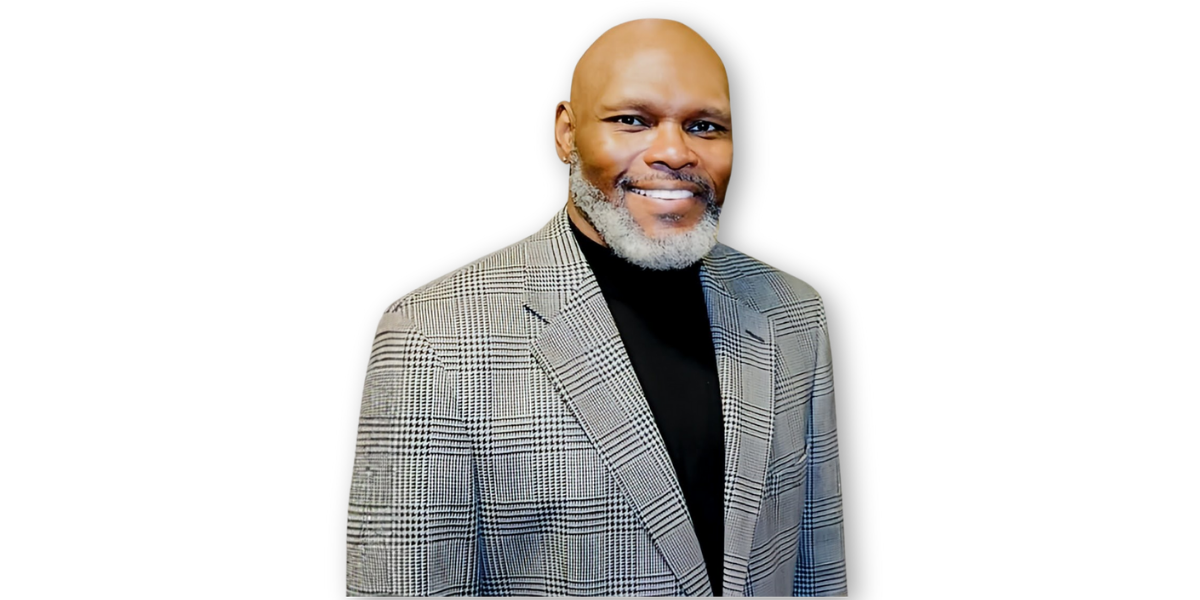
The Poetic Empathy Cards, created by Dr. Michael Anthony Ingram, celebrate the expressive power of women’s poetry and highlight how empathy, heritage, and creative resonance shape the feminine experience.
Where Women’s Voices Become Lanterns
Across generations, women poets have carried the weight of the world in their words—naming it, shaping it, and giving it form. Their poetry has served as both comfort and catalyst, stillness and spark. The Poetic Empathy Cards honor this creative tradition, drawing inspiration from women whose writing has helped us better understand human connection and personal reflection.
For Dr. Michael Anthony Ingram, this project is an extension of a lifelong pursuit. As a retired Associate Professor of Counselor Education and Supervision, he dedicated decades to teaching future counselors the value of emotional presence and relational understanding. As a poet and cultural storyteller, he has long explored how language reveals the inner worlds of marginalized communities. The Poetic Empathy Cards unify these two pursuits—merging academic insight with artistic expression.
A Lineage of Women Who Named the Ache
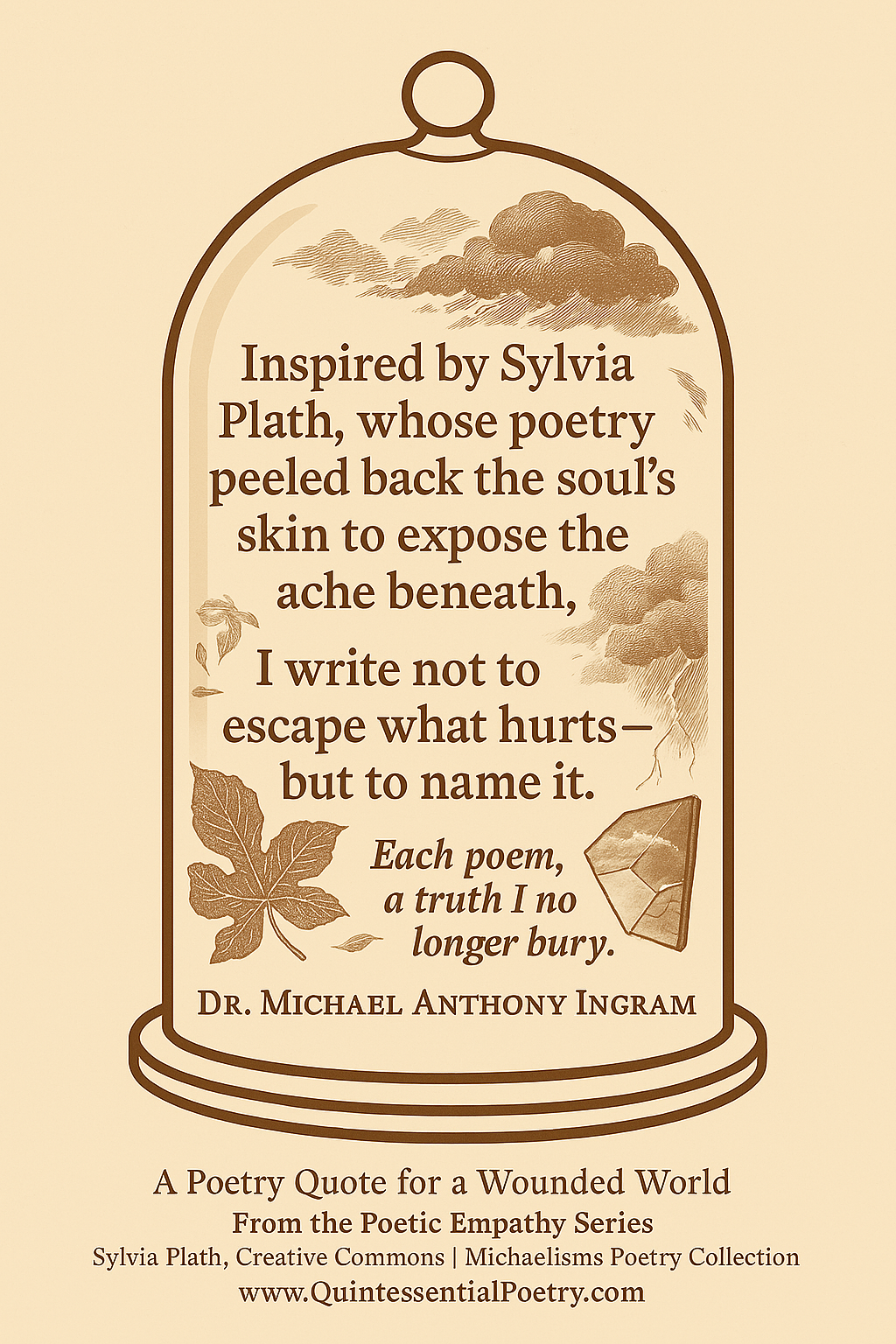
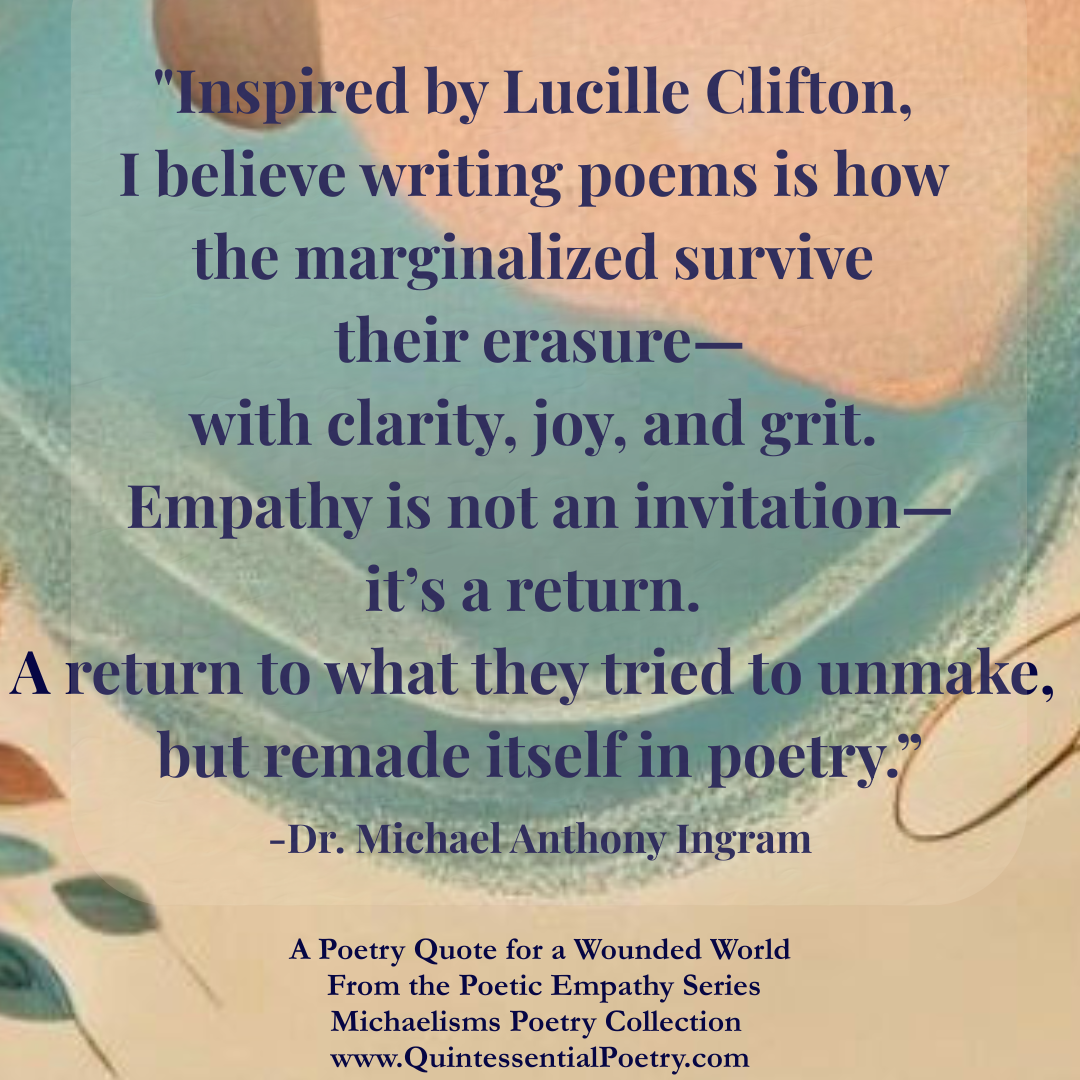
The cards are inspired by four groundbreaking poets who changed the way we engage with emotion, identity, and experience:
- Sylvia Plath — redefining vulnerability as strength
- Mary Oliver — showing us how to listen to stillness
- Gabriela Mistral — writing with clarity about love and loss
- Lucille Clifton — affirming survival, truth, and generational roots
These poets didn’t simply write verses—they created enduring pathways for reflection.
A Small Lesson in Feeling
Sympathy
I see you
I hear you
I feel for you
Empathy
I see you
I hear you
I am with you
What Empathy Means Today
Contemporary scholarship frames empathy as a flexible, context-aware capacity. It blends cognitive awareness with emotional attunement: the ability to perceive another person’s experience and respond with grounded presence and respect. As research notes, empathy evolves with our environments, cultures, and relationships.
This view echoes Dr. Ingram’s long-standing philosophy. For him, empathy has always been about shared presence rather than distant sympathy. It’s a practice of “withness”—a respectful engagement that honors another’s lived reality. This approach, illustrated in the poem above, continues to inform the spirit of the Poetic Empathy Cards and the legacy of women poets who inspire them.
Why the Poetic Empathy Cards Were Created
Today’s world can feel overwhelming—crowded with urgency, expectation, and emotional fatigue. Amid this climate, women’s experiences often remain unrecognized or underrepresented in mainstream narratives.
The Poetic Empathy Cards were created to acknowledge those experiences and elevate the enduring influence of women’s voices across generations.
As Dr. Ingram once wrote:
“Women, the mothers of all fathers.”
This line serves as a reflection on origin and creative influence—an acknowledgment of foundational presence.
An Invitation to Reflect
Each card in the deck offers an opportunity to pause, reflect, and reconnect.
They speak gently and directly to artists, caregivers, leaders, daughters, and those who carry quiet strength. Their messages serve as a reminder of personal and collective presence:
- You are not too tender.
- You are not too much.
- You are the archive.
In a world that often values resilience over vulnerability, these cards create space for both.
Changed from: “honor the beauty of breaking open.”
A Call to Listen
At its core, the Poetic Empathy Cards offer an invitation: to listen deeply—to ourselves, to each other, and to the women whose poetry shaped how we understand connection.
They invite us to explore empathy as a living practice and creativity as a bridge to understanding.
Let poetry guide reflection.
Let empathy nurture presence.
Let voice become legacy.
References
The following sources support the conceptual framework and inspiration behind the Poetic Empathy Cards:
- Heyers, K., Schrödter, R., Pfeifer, L. S., Ocklenburg, S., Güntürkün, O., & Stockhorst, U. (2025). (State) empathy: How context matters. Frontiers in Psychology, 16. https://doi.org/10.3389/fpsyg.2025.1525517
- Ingram, M. A. (2003). When I dream of Paris: How sociocultural poetry can assist psychotherapy practitioners to understand and affirm the lived experiences of members of oppressed groups. Journal of Poetry Therapy, 16(4), 221–227. https://doi.org/10.1080/0889367042000197358
About Dr. Michael Anthony Ingram
Dr. Michael Anthony Ingram is a poet, educator, and founder of the Quintessential Poetry Network. A retired Associate Professor at Oregon State University, he has trained counselors in empathy, emotional intelligence, and cultural awareness. His early work on sociocultural poetry has informed national conversations on empathy in education and counseling.
Dr. Ingram is an internationally recognized performance poet, three-time Pushcart Prize nominee (2025), and host of the Quintessential Poetry Podcast. His latest poetry collection, Metaphorically Screaming, continues to explore themes of identity, history, and expressive truth.
Social Media Links:
